
Small businesses are prime targets.
Hackers know SMBs often lack dedicated security resources.
Human error contributes to 95% of cybersecurity breaches.
These seven mistakes put your business at risk. Here's how to fix them.
Mistake #1: Weak or No Password Policies
The problem.
Default passwords still in use.
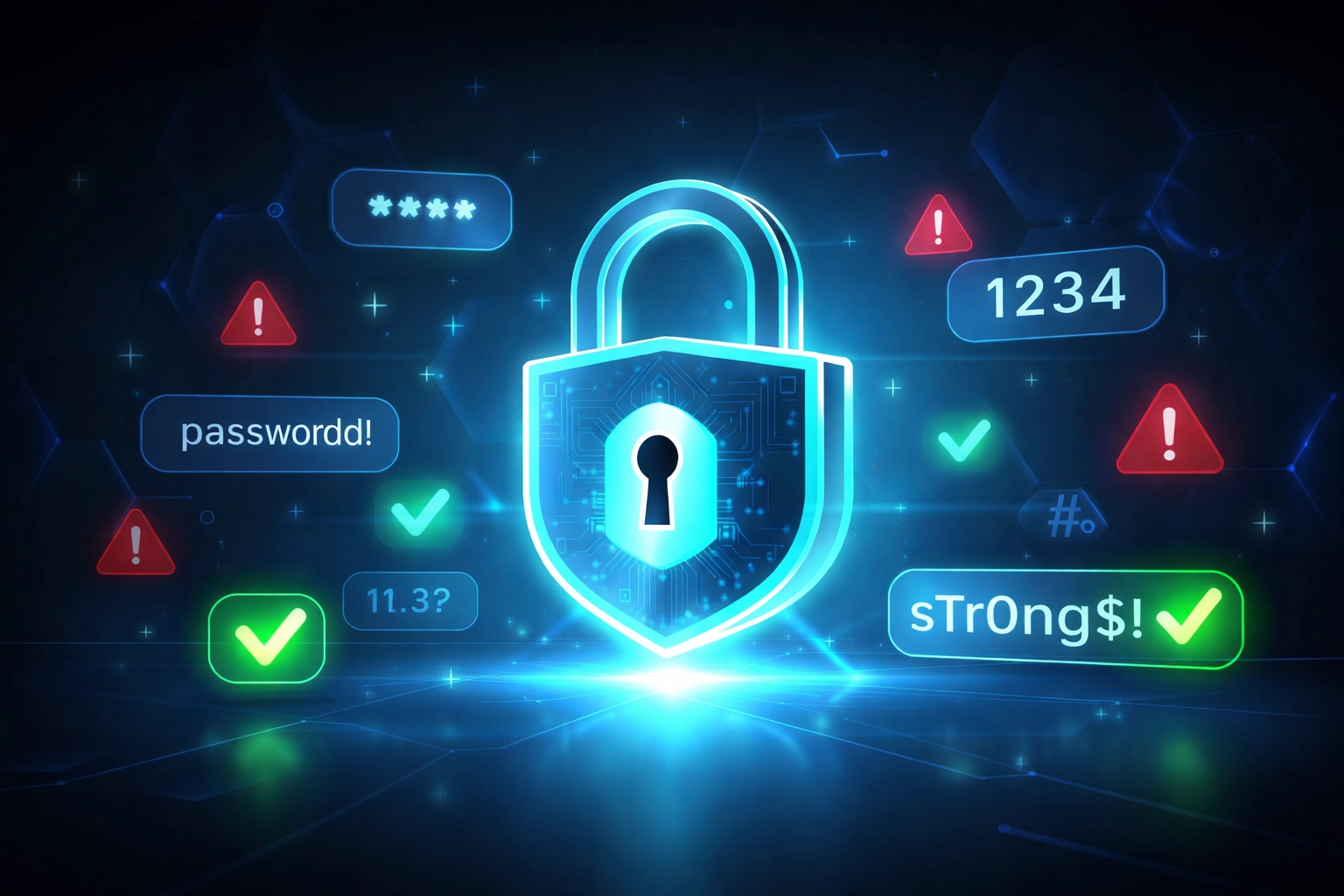
"123456" or "password" as credentials.
Same password across multiple accounts.
64% of people reuse passwords.
One compromised account leads to many.
The Fix
Implement a formal password policy.
Requirements:
- Minimum 12 characters
- Mix of uppercase, lowercase, numbers, symbols
- Unique password for each account
- Regular password changes
Deploy multifactor authentication (MFA). Password becomes just one barrier.
Use password management software. Securely stores all credentials.
Change default passwords immediately on new devices and software.
Mistake #2: Ignoring Software Updates
The problem.
Outdated software contains known vulnerabilities.
Hackers exploit these gaps easily.
Leads to ransomware attacks. Data breaches. System compromise.
Unsupported software is a liability.
The Fix
Update operating systems regularly.
Never ignore security patches.
Automate updates where possible. Removes human delay.
Patch management across all devices.
Remove software no longer supported by vendors.
We monitor client systems for outdated software. Updates are applied promptly.
Mistake #3: No Employee Training
Human error is the biggest vulnerability.
IBM study: Human element in 95% of breaches.
Employees fall for phishing. Use weak passwords. Misplace devices. Click malicious links.
Untrained staff are an open door.

The Fix
Comprehensive cybersecurity training program.
Topics to cover:
- Strong password practices
- Identifying phishing attempts
- Social engineering tactics
- Proper data handling
- Reporting suspicious activity
Conduct regular training. Not just once.
Awareness campaigns reinforce good habits.
Security-conscious workforce is your first line of defense.
Mistake #4: Falling for Phishing Attacks
The problem.
Email phishing accounts for over 20% of breaches.
Attacks are sophisticated now. Well-written. Personalized. Create urgency.
One click can compromise entire systems.
The Fix
Train employees to recognize red flags:
- Unexpected attachments
- Urgent requests for payment or credentials
- Sender address doesn't match company domain
- Grammar or formatting inconsistencies
Implement simulated phishing tests. Measures awareness. Identifies gaps.
Email filtering tools catch many attempts before they reach inboxes.
Verify requests through separate communication channels. Especially financial transactions.
Mistake #5: No Data Backup and Recovery Plan
The problem.
Ransomware encrypts your data. Operations halt.
Without backups, recovery may be impossible.
Data loss also results from:
- Hardware failures
- Human error
- Natural disasters
- Theft
No backup means no business continuity.

The Fix
Regular automated backups.
Follow the 3-2-1 rule:
- 3 copies of data
- 2 different storage types
- 1 offsite or cloud location
Test backups regularly. Ensure they actually work.
Keep backups separate from central systems. Prevents simultaneous infection during attacks.
Develop a data recovery plan. Define roles. Outline steps. Practice execution.
Mistake #6: Operating Without Formal Security Policies
The problem.
No clear guidelines means inconsistent practices.
Employees don't know:
- How to securely use devices
- How to handle sensitive information
- How to respond to security incidents
- What's acceptable for remote work
Ambiguity creates vulnerabilities.
The Fix
Establish formal security policies.
Areas to address:
- Password management
- Data classification and handling
- Incident reporting procedures
- Remote work security
- Mobile device use
- Acceptable use of company resources
- Third-party vendor access
Document everything.
Communicate policies to all employees.
Ensure understanding. Get acknowledgment.
Review and update policies annually.
Mistake #7: Not Monitoring Your Network
The problem.
Many SMBs lack dedicated IT staff.
No one watching for unusual activity.
Breaches go undetected for weeks. Months.
Longer detection time means greater damage.
The Fix
Implement network monitoring tools.
Or outsource to managed IT services.
Real-time threat detection. Immediate alerts.
We provide security monitoring for our clients. Threats are identified and addressed promptly.
Develop an incident response plan (IRP):
- Steps to take during a breach
- Communication protocols
- Containment procedures
- Recovery process
Avoid panic. Reduce delays. Minimize damage.
Additional Safeguards
Beyond the seven mistakes.
Implement these measures:
Antivirus software. On all devices. Updated regularly.
Firewalls. Network perimeter protection.
Wi-Fi security. Update passwords regularly. Use WPA3 encryption.
Mobile device management (MDM). Control remote worker devices. Enforce security policies.
Third-party vendor verification. Confirm cybersecurity requirements before granting data access.
Access controls. Least privilege principle. Users only access what they need.
Encryption. Data at rest and in transit.
The Cost of Inaction
Average cost of data breach for small businesses: significant operational disruption.
Reputation damage. Customer trust eroded.
Regulatory fines possible depending on industry.
Downtime costs money. Every hour.
Prevention is cheaper than recovery.
How We Help
We provide managed IT services for small and medium businesses.
Our security services include:
- Network monitoring
- Patch management
- Security assessments
- Employee training resources
- Backup and disaster recovery planning
- Incident response support
Systems are monitored and remediated.
You focus on your business. We handle IT security.
Next Steps
Review your current security posture.
Identify which of these seven mistakes apply.
Address gaps systematically.
Need assistance?
We work with SMBs to strengthen IT security.
Have Questions?
Call: 815-516-8075
Visit: xtekit.com
Don't wait for a breach to take action.