

Cyber insurance applications are changing.
Quantum computing threats are entering underwriting criteria.
Policy renewals in 2026 and 2027 will include questions most small businesses cannot answer today.
Premiums will reflect quantum preparedness: or lack thereof.
Why Insurers Care About Quantum Threats Now
Cryptographically relevant quantum computers do not exist yet.
But the timeline has compressed.
Industry estimates place viable quantum decryption capabilities within 5-10 years.
Insurers assess future risk exposure today.
They underwrite policies covering multi-year breach scenarios.
Data stolen now could be decrypted later.
This is not theoretical: it changes claim liability projections immediately.

1. Current Encryption Standards and Data Inventory
What insurers will ask:
- What encryption methods protect sensitive data at rest and in transit?
- Which systems use RSA, ECC, or other quantum-vulnerable algorithms?
- What data categories exist in your environment?
Why this matters:
RSA-2048 encryption: standard across most business systems: will be breakable by future quantum systems.
Elliptic curve cryptography faces similar vulnerabilities.
Customer records, financial data, proprietary information, healthcare data, and intellectual property all become exposure points.
What to document:
Data classification schema.
Current encryption protocols across all systems.
Storage locations for sensitive information.
Retention schedules.
Backup encryption methods.
Insurers need visibility into what could become compromised post-quantum.
They will adjust coverage limits and premiums accordingly.
2. "Harvest Now, Decrypt Later" Attack Surface
What insurers will ask:
- Have you identified historical data breaches or suspected unauthorized access?
- What data retention policies limit long-term exposure?
- Are legacy backups encrypted with quantum-vulnerable methods?
The threat model:
Adversaries are already harvesting encrypted data.
They store it until quantum decryption becomes available.
Your encrypted customer database from 2024 becomes readable in 2030.
This is happening now: not in some distant future.

What to implement:
Aggressive data minimization policies.
Reduced retention periods for sensitive information.
Regular purging of unnecessary encrypted datasets.
Audit trails showing what data existed when.
Insurers will evaluate whether your business has taken reasonable steps to limit this exposure window.
Organizations with 10-year data retention policies face higher quantum-related risk than those with 2-year policies.
Coverage terms will reflect this difference.
3. Digital Signature and Authentication Infrastructure
What insurers will ask:
- What systems rely on digital signatures for authentication?
- How are software updates verified?
- What certificate authorities issue your digital certificates?
The vulnerability:
Quantum computers can forge digital signatures.
This compromises:
Software update mechanisms.
Digitally signed contracts.
Email authentication protocols.
Financial transaction verification.
Identity management systems.
API authentication.
Business impact scenarios insurers evaluate:
Fraudulent wire transfers authenticated with forged signatures.
Malware distributed through compromised software update channels.
Repudiation of digitally signed agreements.
Unauthorized access via forged authentication tokens.
What to document:
Complete inventory of systems using digital signatures.
Certificate issuance and renewal processes.
Multi-factor authentication implementations.
Transaction verification workflows.
Insurers need to understand your signature-dependent risk surface.

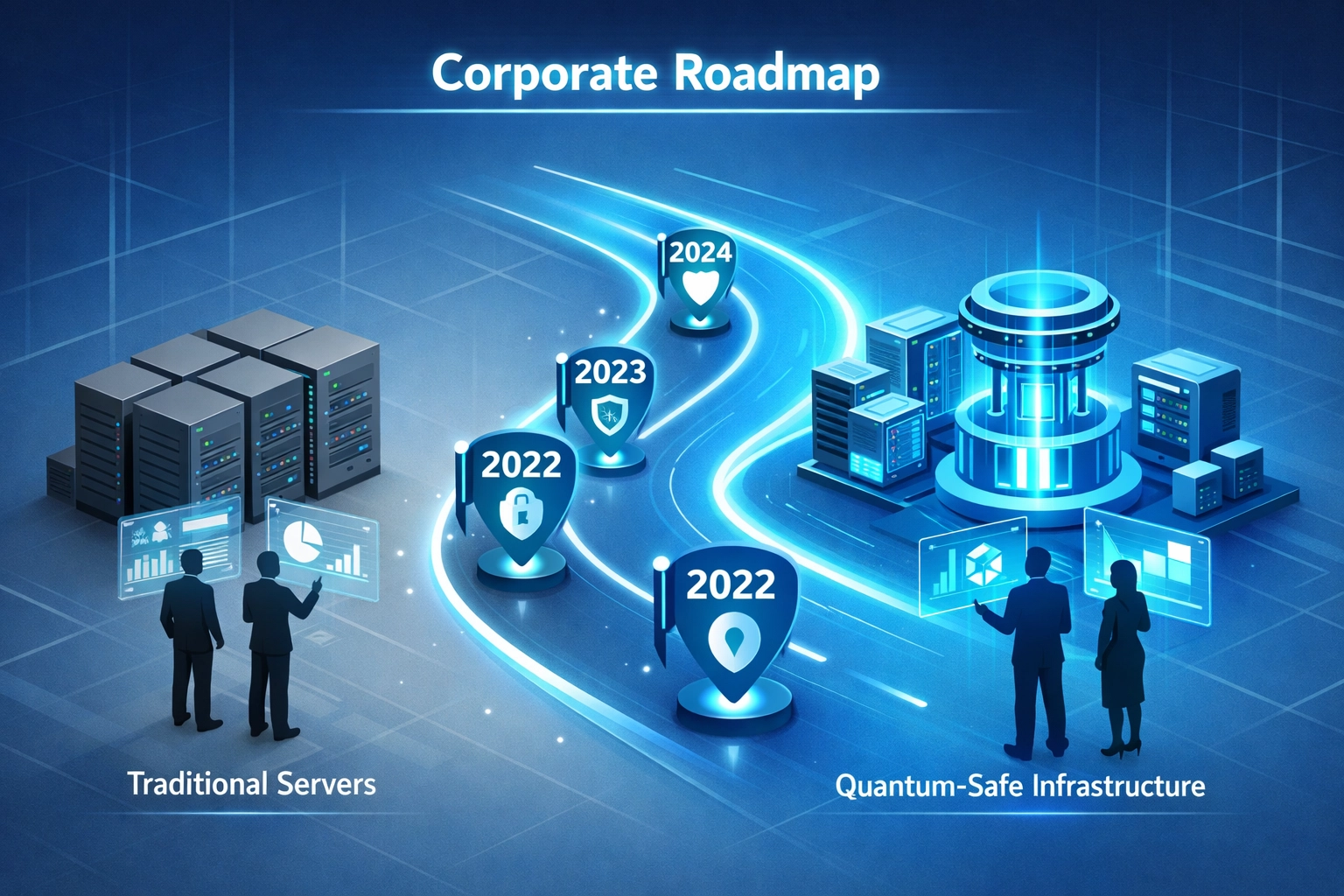
4. Quantum Security Roadmap and Migration Planning
What insurers will ask:
- Has leadership been briefed on quantum threats?
- Who owns quantum security responsibility?
- Does a funded migration plan exist?
- What timeline has been established for post-quantum cryptography adoption?
The current landscape:
Only 10-11% of organizations have funded quantum security initiatives.
Most lack assigned ownership.
Few have begun migration planning.
This represents significant market-wide risk.
Early adopters will receive preferential underwriting treatment.
What insurers want to see:
Executive-level awareness documentation.
Cross-functional working groups (IT, security, compliance, legal).
Phased migration timelines.
Budget allocations for quantum-safe implementations.
Crypto-agility architecture planning.
Vendor assessment criteria including quantum readiness.
We help businesses develop these roadmaps.
Migration planning does not require quantum physics expertise.
It requires systematic inventory, risk assessment, and phased implementation strategy.
Starting now creates defensible positions for insurance negotiations.
5. Post-Quantum Cryptography Standards Compliance
What insurers will ask:
- Are you tracking NIST post-quantum cryptography standards?
- What compliance obligations apply to your industry?
- When will migration to quantum-resistant algorithms begin?
- What operational disruptions could result from non-compliance?
The regulatory timeline:
NIST published post-quantum cryptography standards in 2024.
Federal requirements are emerging now.
Industry-specific mandates will follow.
Healthcare, finance, government contractors, and critical infrastructure face earliest deadlines.
Compliance risk scenarios:
Inability to process credit card transactions due to non-compliant encryption.
Loss of industry certifications requiring quantum-safe standards.
Regulatory fines for inadequate data protection.
Breach notification requirements triggered by quantum-vulnerable systems.
Contract violations with quantum-ready partners.
What to prepare:
Standards tracking mechanisms.
Compliance calendar for relevant regulations.
Gap analysis between current state and quantum-safe requirements.
Vendor quantum readiness assessments.
Operational continuity plans during migration periods.
Insurers will evaluate whether your business could face operational shutdowns due to quantum-related non-compliance.
This directly impacts business interruption coverage and policy terms.
What This Means for Your Next Policy Renewal
Quantum-related questions are entering application questionnaires now.
Answers affect:
Premium calculations.
Coverage exclusions.
Sublimits on breach-related claims.
Required security controls.
Businesses demonstrating quantum awareness and initial preparation will secure better terms.
Those without any quantum security strategy face:
Higher premiums.
Reduced coverage.
Quantum-specific exclusions.
More frequent audits.
Mandatory remediation timelines as policy conditions.

Action Items Before Your Next Insurance Review
Document current state:
Complete data inventory.
Encryption method catalog.
Digital signature dependency mapping.
Current retention policies.
Establish ownership:
Assign quantum security responsibility.
Brief executive leadership.
Form cross-functional working group.
Develop initial roadmap:
Identify highest-risk systems.
Prioritize migration candidates.
Establish preliminary timeline.
Allocate exploratory budget.
Engage vendors:
Request quantum readiness statements.
Identify quantum-safe product options.
Assess upgrade paths.
These steps create documentation insurers require.
They demonstrate reasonable security posture.
They establish defensible positions for claims scenarios.
Working With Your IT Provider
Your managed service provider should address quantum threats proactively.
Questions to ask:
- What is your quantum security assessment process?
- How are you tracking post-quantum cryptography developments?
- What migration planning support do you provide?
- Which vendors in our stack offer quantum-safe options?
We evaluate client environments for quantum vulnerability.
We develop migration roadmaps aligned with insurance requirements.
We track regulatory developments affecting coverage terms.
Next Steps
Schedule quantum security assessment.
Review current cyber insurance policy for quantum-related language.
Document existing encryption and authentication infrastructure.
Develop preliminary migration timeline.
Request quantum security consultation: https://xtekit.com/business-solutions-information-request/
Quantum threats change insurance underwriting now.
Not in five years.
Preparation today determines coverage availability and cost tomorrow.