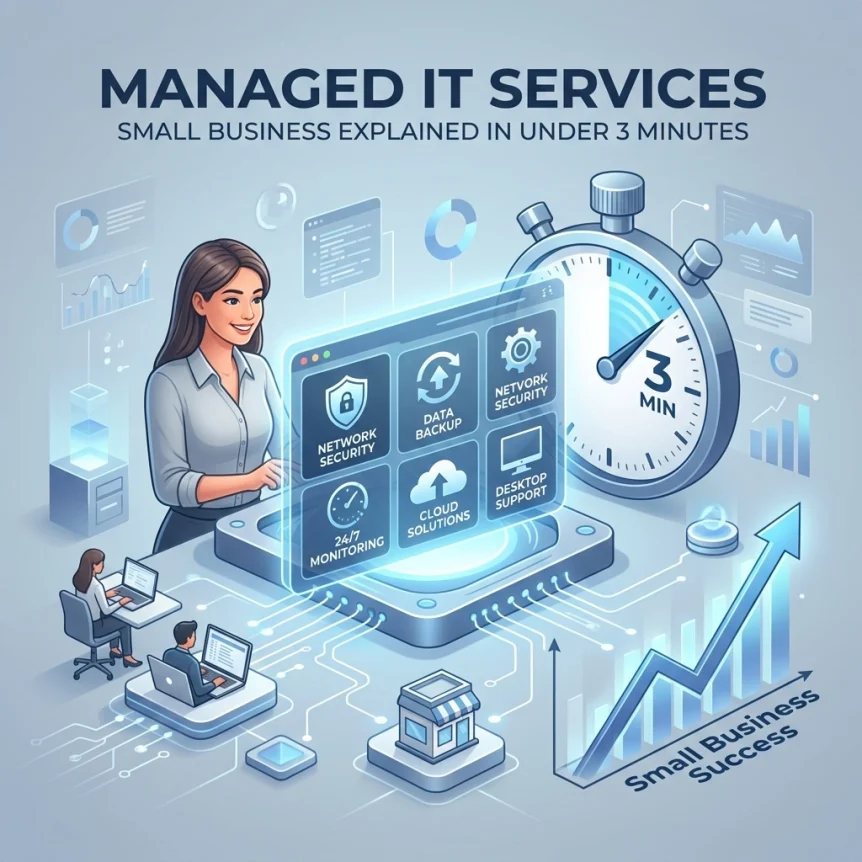
Managed IT services represent the outsourcing of information technology operations to a third-party provider.
X-Tek functions as the Managed Service Provider (MSP).
Infrastructure is monitored remotely.
Issues are remediated before failure occurs.
Predictable monthly costs replace fluctuating repair bills.
Internal staff focus on core business functions.
Technology debt is reduced through lifecycle management.
Service Model
Traditional IT operates on a break-fix basis.
Equipment fails.
Operations cease.
Technicians are dispatched.
Invoices are generated per hour.
Managed IT shifts to a subscription model.
Systems are maintained continuously.
Uptime is the primary metric.
Maintenance occurs during non-business hours.
Disruption is minimized.
Core Components
Network Security Monitoring
Threats are identified in real-time.
Firewalls are configured and updated.
Intrusion detection systems analyze traffic patterns.
End-point protection is deployed to all workstations.
Malware and ransomware are blocked.
Patch management is automated.
Security audits are performed regularly.

Cloud Migration
Data is moved to secure remote environments.
Scalability is achieved through virtualized resources.
On-site server requirements are reduced.
Access is provided from any location with internet connectivity.
Migration paths include public, private, and hybrid clouds.
Legacy applications are transitioned to SaaS platforms.
Redundancy is built into the architecture.
Unified Communications (VOIP)
Analog phone systems are replaced with Voice over Internet Protocol.
Costs for long-distance and international calls are eliminated.
Integration with desktop and mobile devices is standard.
Auto-attendants and call routing are configured via software.
Maintenance of physical lines is removed.
Voice data is encrypted.
Reliability is managed through Quality of Service (QoS) settings.
Operational Efficiency
Performance metrics are tracked.
Network bottlenecks are removed.
Hardware is monitored for signs of imminent failure.
Inventory of assets is maintained.
Software licenses are tracked for compliance.
User permissions are audited.
Backups are verified daily.

Business Continuity
Disaster recovery plans are established.
Data is backed up to off-site locations.
Recovery Point Objectives (RPO) are defined.
Recovery Time Objectives (RTO) are minimized.
Systems can be restored to virtual environments in minutes.
Natural disasters do not result in data loss.
Cyberattacks are mitigated through rapid restoration.
Support Infrastructure
Help desk services are available for end-user issues.
Remote desktop protocols allow for immediate troubleshooting.
On-site support is provided for hardware installation.
Ticketing systems track resolution times.
Escalation procedures ensure complex issues reach senior engineers.
M-F 9AM-5pm Central Time operations.

Infrastructure Management
Routers and switches are optimized for speed.
Wireless access points are positioned for maximum coverage.
VLANs are used to segment traffic.
Bandwidth usage is monitored.
VPNs are secured for remote workers.
Cabling is organized and labeled.
Server racks are cooled and powered with UPS systems.
Strategic Planning
Technology roadmaps are developed.
Budgeting for future upgrades is simplified.
Vendors are managed by X-Tek.
Procurement is handled through established channels.
Compliance requirements are met (HIPAA, PCI-DSS, GDPR).
Annual technology reviews are conducted.
ROI is measured against operational improvements.

Cost Analysis
Capital expenditures (CAPEX) become operating expenses (OPEX).
Training costs for internal IT staff are eliminated.
Software subscription management is consolidated.
Energy costs are reduced via cloud consolidation.
Productivity loss due to downtime is quantified and reduced.
Expertise is accessed without executive-level salaries.
Implementation Process
Initial assessment of current environment.
Identification of vulnerabilities and inefficiencies.
Deployment of monitoring agents.
Stabilization of existing network hardware.
Standardization of software versions.
Transition to managed support model.
Continuous optimization and reporting.
Security Protocols
Multi-factor authentication (MFA) is mandated.
Password policies are enforced.
Email filtering blocks phishing attempts.
Data encryption is applied at rest and in transit.
Physical security of server rooms is verified.
Security awareness training is provided to employees.
Dark web monitoring tracks leaked credentials.

Remote Work Integration
Work-from-home capabilities are secured.
Collaboration tools are deployed (Teams, Slack).
Mobile device management (MDM) protects company data on personal phones.
Remote access gateways are maintained.
Video conferencing hardware is supported.
Performance is monitored over residential ISP connections.
Technical Terminology
SLA: Service Level Agreement.
MSP: Managed Service Provider.
RMM: Remote Monitoring and Management.
PSA: Professional Services Automation.
BDR: Backup and Disaster Recovery.
SIEM: Security Information and Event Management.
QoS: Quality of Service.
Conclusion of Process
Optimization is ongoing.
Technology evolves.
X-Tek manages the transition.
Stability is maintained.
Have Questions?
https://xtekit.com/business-solutions-information-request/
Contact Information
Business Solutions Information Request:
https://xtekit.com/business-solutions-information-request/
Phone: 815-516-8075
Business Hours: Monday – Friday, 9:00 AM – 5:00 PM Central