

Category: blog
Data protection requirements are expanding.
Threats are automated.
Business systems are distributed across cloud platforms, endpoints, SaaS applications, mobile devices, and third-party services.
SMBs entering 2027 need a defined protection baseline.
The following controls are non-negotiable.
1. A Complete Data and System Inventory
Protection cannot be applied to systems that are not known.
Maintain an inventory of:
- Servers
- Workstations
- Laptops
- Mobile devices
- Cloud platforms
- SaaS applications
- Network equipment
- Backup systems
- AI tools
- Third-party integrations
- Customer and financial data repositories
Classify data by business impact.
Identify:
- Data that must remain available
- Data that requires confidentiality
- Data subject to contractual or regulatory requirements
- Systems required for daily operations
- Systems that can tolerate extended downtime
Ownership must also be assigned.
Each critical system should have:
- A business owner
- A technical owner
- A recovery priority
- An access list
- A backup requirement
- A documented dependency list
The NIST Cybersecurity Framework provides a structure for this process through its Govern and Identify functions.
The NIST Small Business Quick-Start Guide provides a practical starting point for SMBs.
2. MFA and Least-Privilege Access
Passwords are not sufficient.
Multi-factor authentication should be required for:
- Microsoft 365 and Google Workspace
- VPN access
- Remote desktop access
- Financial systems
- Administrative accounts
- Backup platforms
- Security tools
- AI platforms
- Vendor accounts
Phishing-resistant MFA should be used for privileged accounts where supported.
Preferred options include:
- FIDO2 security keys
- Passkeys
- Hardware tokens
- Platform authenticators
SMS-based MFA is weaker.
It should not be the preferred method for administrative access.
Access must also be limited by role.
Users should receive only the permissions required for their work.
Administrative access should be:
- Limited
- Logged
- Reviewed
- Removed when no longer required
- Separated from standard user accounts
Vendor access requires the same controls.
Third parties should not receive permanent administrator access without documented approval and monitoring.
3. Encryption Across the Environment
Sensitive data must be encrypted at rest and in transit.
This includes:
- Laptops
- Mobile devices
- Servers
- Databases
- File shares
- Backup media
- Cloud storage
- Email transfers
- Remote connections
- Removable drives
Encryption keys must be protected separately from the data.
Access to key management systems should be restricted and logged.
Encryption does not replace access controls.
It limits exposure when a device, backup, or storage system is lost or accessed without authorization.
The FTC small business cybersecurity guidance recommends encryption for sensitive information stored on devices, transmitted across networks, and retained in backups.
4. Endpoint Detection and Response
Antivirus alone is not a complete endpoint control.
Endpoint detection and response should be deployed across:
- Windows workstations
- macOS systems
- Servers
- Virtual machines
- Remote devices
- Administrative systems
The platform should support:
- Behavioral detection
- Ransomware detection
- Tamper protection
- Threat isolation
- Centralized alerting
- Investigation records
- Automated response
- Endpoint visibility
Alerts must be reviewed.
A tool that generates notifications without response procedures does not provide continuous protection.
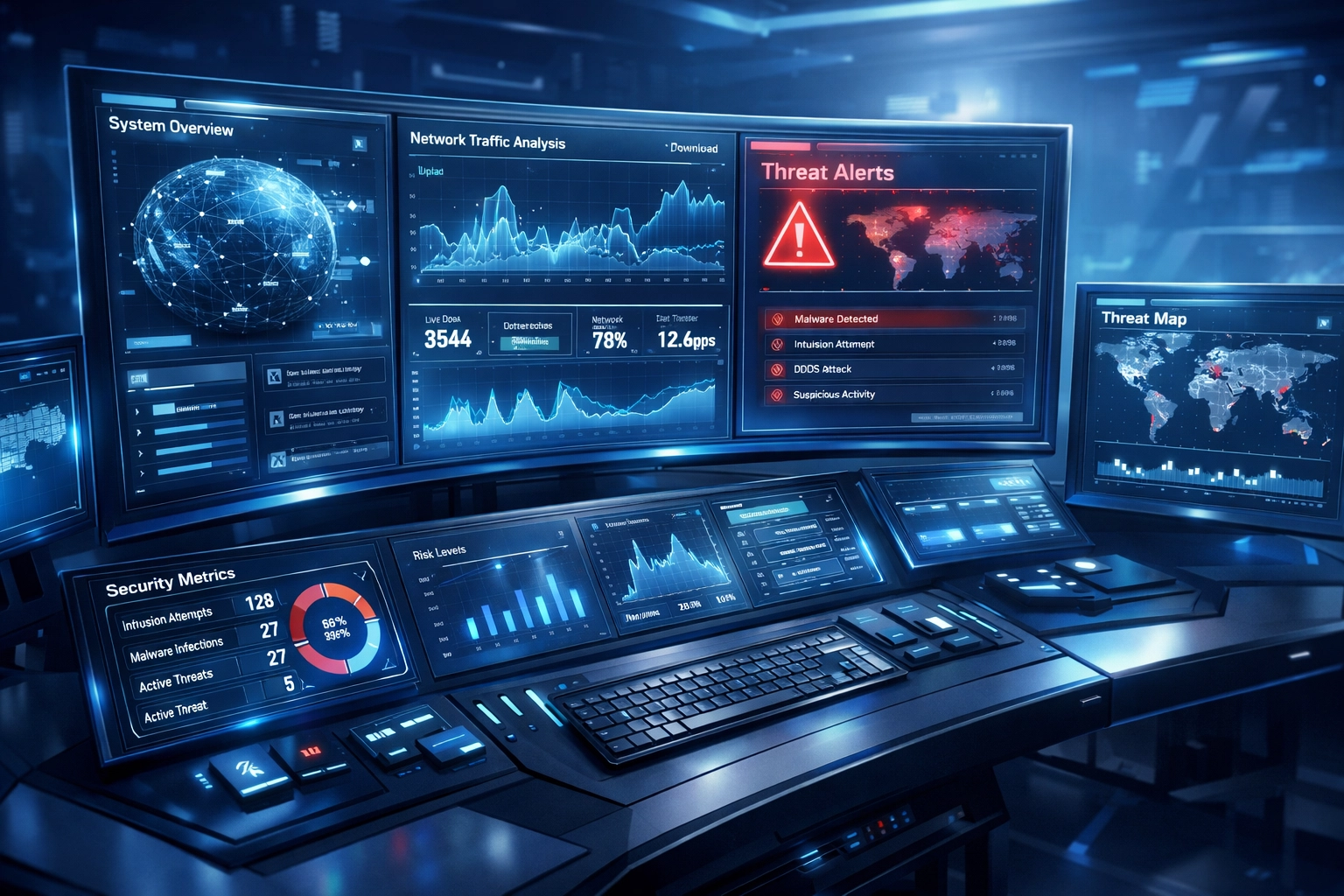
SMBs without internal security staff should use managed detection and response or a managed security operations service.
Monitoring should include:
- Endpoint activity
- Authentication events
- Firewall events
- Email threats
- Cloud activity
- Backup activity
- Administrative changes
5. Network Segmentation and Secure Configuration
A flat network increases the impact of a single compromised device.
Critical systems should be separated from standard user devices.
Segmentation should be considered for:
- Servers
- Backup infrastructure
- Finance systems
- Voice systems
- Guest Wi-Fi
- Security devices
- Production equipment
- Administrative workstations
Firewalls should be configured according to business requirements.
Default passwords must be removed.
Unused ports and services must be disabled.
Legacy protocols should be removed where possible.
Remote access should be protected by:
- MFA
- VPN controls
- Conditional access
- Session logging
- Device validation
- Time-based access limits
Network configuration reviews should be performed after major changes and on a scheduled basis.
X-Tek provides network design, maintenance, monitoring, and infrastructure support through its IT services.
6. AI Security Controls
AI introduces two separate security requirements.
AI can improve detection and response.
AI can also create new data exposure and access risks.
Approved AI tools must be documented.
An AI usage policy should define:
- Approved platforms
- Prohibited data
- Required account controls
- Human review requirements
- Retention settings
- Vendor responsibilities
- Logging requirements
- Incident reporting procedures
Employees should not enter confidential information into public AI services without approval.
Data requiring review includes:
- Customer records
- Financial information
- Credentials
- Legal documents
- Source code
- Internal network information
- Contract terms
- Employee information
- Proprietary business data
AI accounts require MFA and least-privilege access.
API keys must be stored securely.
AI-generated code must be reviewed before deployment.
AI-related configurations, prompts, models, and datasets must be included in asset inventories and recovery plans.
AI-enabled security tools should be evaluated for:
- Data retention
- Data processing locations
- Model training practices
- Access logging
- Encryption
- Breach notification
- Administrative controls
- Contractual protections

X-Tek addresses AI-related network risks through security assessments, monitoring, vendor review, and infrastructure configuration.
Additional planning is covered in Is Your Small Business Network Setup Ready for AI-Powered Attacks.
7. Immutable and Tested Backups
A backup that can be deleted or encrypted by an attacker is not sufficient.
A practical baseline is the 3-2-1-1-0 model:
- Three copies of important data
- Two different storage types
- One copy stored offsite
- One copy offline or immutable
- Zero unresolved errors after verification
Backups should include more than documents.
Protect:
- Databases
- Operating systems
- Application data
- System configurations
- Virtual machines
- Cloud data
- Network configurations
- AI-related assets
- Security configurations
- Critical SaaS information
Backup administration must be separated from standard production administration.
Backup credentials should use:
- MFA
- Unique passwords
- Limited permissions
- Separate administrator accounts
- Activity logging
- Access reviews
Backups must be tested.
Testing should include:
- File-level restoration
- Application restoration
- Full system restoration
- Cloud recovery
- Recovery to alternate hardware
- Recovery after ransomware
- Recovery after facility loss
Document the results.
Record:
- Restore duration
- Data recovered
- Errors identified
- Dependencies that failed
- Required remediation
The CISA backup guidance recommends regular backups and restoration testing.
Backup is one part of continuity.
The difference is covered in Why Your Backup Might Not Be Enough.
8. Defined RPO and RTO Targets
Recovery planning requires measurable objectives.
Recovery Point Objective defines the acceptable amount of data loss.
Recovery Time Objective defines the acceptable period of downtime.
Targets should be assigned by system.
Examples:
- File access
- Accounting
- Customer management
- Order processing
- Production systems
- Voice communications
- Public-facing services
Critical systems require more frequent backups and faster recovery options.
A nightly backup may not meet the required recovery point.
A file-level restore may not meet the required recovery time.
Plans must be tested against actual operating requirements.
9. Patch Management and Vulnerability Remediation
Unpatched systems remain a common entry point.
Patch management should cover:
- Operating systems
- Browsers
- Business applications
- Firewalls
- VPN systems
- Routers
- Switches
- Printers
- Mobile devices
- Cloud applications
- Security tools
Unsupported systems should be removed or isolated.
Vulnerabilities should be prioritized by:
- Exploitability
- Internet exposure
- Business impact
- Data access
- Privilege level
- Available remediation
Emergency changes require documentation.
Routine changes require testing and scheduled deployment.
10. Incident Response and Recovery Procedures
A written incident response plan is required before an incident occurs.
The plan should identify:
- Internal decision-makers
- Managed IT contacts
- Security contacts
- Legal counsel
- Insurance contacts
- Law enforcement contacts
- Notification responsibilities
- Backup recovery procedures
- Public communication procedures
Staff should know how to report:
- Suspicious email
- Unexpected MFA prompts
- Lost devices
- Unauthorized access
- Malware alerts
- Data transmission errors
- AI tool misuse
Response procedures should address:
- Detection
- Containment
- Investigation
- Eradication
- Recovery
- Notification
- Post-incident review
Plans must be reviewed after incidents, major infrastructure changes, and significant vendor changes.
X-Tek as the Managed IT Partner
SMB data protection requires ongoing administration.
Controls must be:
- Configured
- Monitored
- Tested
- Updated
- Documented
- Remediated
X-Tek provides managed IT support, network infrastructure services, cloud services, backup monitoring, security monitoring, server maintenance, workstation support, and business continuity planning.
We assess current controls.
We identify gaps.
We implement prioritized improvements.
Systems are monitored and issues are remediated.
The X-Tek uptime services support operational availability across business systems.
The objective heading into 2027 is defined.
Protect critical data.
Limit access.
Monitor activity.
Secure AI use.
Maintain recoverable backups.
Test recovery.
Document response.
Contact Information
Business Solutions Information Request:
https://xtekit.com/business-solutions-information-request/
815-516-8075