

Category: blog
AI adoption depends on infrastructure.
Not only on the AI tool.
A small business needs:
- Stable network capacity
- Managed identities
- Clean and accessible data
- Security controls
- Tested backups
- Defined usage policies
- Ongoing IT management
AI readiness is an infrastructure project.
It is not only a software purchase.
Start With an Infrastructure Assessment
Before deploying an AI tool, document the current environment.
Review:
- Internet service
- Wi-Fi coverage
- Firewalls and switches
- Endpoints
- Servers
- Cloud platforms
- User accounts
- SaaS applications
- Data locations
- Backup systems
- Existing AI use
Include unsanctioned tools.
Employees may already be using public AI platforms for drafting, analysis, transcription, coding, or customer support.
The assessment should identify:
- Which tools are being used
- Which users have access
- What data is being entered
- Where outputs are stored
- Which integrations are active
- Which vendors retain prompts or files
The NIST Cybersecurity Framework 2.0 Small Business Quick-Start Guide provides a useful baseline for this review.
X-Tek can assess the current environment, document gaps, and create an implementation plan.
1. Network Capacity
Most small businesses will use cloud-hosted AI tools.
Local GPU infrastructure is usually not required.
Network capacity remains important.
AI tools may require:
- Higher upload capacity
- Stable download speeds
- Low latency
- Reliable Wi-Fi
- Consistent VPN performance
- Sufficient firewall throughput
- Capacity for file transfers
- Traffic monitoring
Large documents, images, audio files, and video files increase bandwidth requirements.
AI integrations may also run continuously through:
- Microsoft 365
- Google Workspace
- CRM platforms
- Accounting systems
- Document management platforms
- Workflow automation tools
- Cloud storage
Review the full network path.
Not only the internet plan.
Check:
- ISP performance
- Upload speed
- Wireless coverage
- Access point capacity
- Switch utilization
- Firewall age
- Remote user connections
- Network segmentation
- Backup internet options
Separate network segments should be considered for:
- Employees
- Guests
- IoT devices
- Voice systems
- Servers
- Administrative systems
- Sensitive data

AI tools also create new access paths.
A compromised integration or account may provide access to connected systems.
Network design must account for this risk.
X-Tek provides network design, equipment, cabling, and network maintenance for business environments that require managed infrastructure.
2. Identity and Access Management
AI tools should not be deployed using unmanaged accounts.
Each user should have:
- A unique identity
- A strong password
- Multi-factor authentication
- Appropriate permissions
- A defined role
- A documented access owner
Use centralized identity management where practical.
Single sign-on can improve visibility across approved AI platforms.
Administrators can identify:
- Who is using the tool
- Which applications are connected
- Which data is accessible
- When access was granted
- When access should be removed
Apply least privilege.
An employee using AI for document drafting does not automatically need access to:
- Payroll data
- Customer payment records
- Legal files
- Executive mailboxes
- Administrative settings
- Full company file shares
Review access when:
- Employees change roles
- Contractors leave
- Vendors are replaced
- AI tools are added
- Integrations are enabled
- Sensitive data classifications change
MFA should be required for email, cloud storage, administrator accounts, financial systems, and AI platforms.
The NIST Identity and Access Management resource provides additional guidance on controlling access to systems and data.
3. Data Hygiene
AI output quality depends on source data.
Poor data produces unreliable results.
Before connecting data to an AI tool, review:
- Accuracy
- Completeness
- Freshness
- Duplicate records
- File naming
- Ownership
- Retention
- Permissions
- Data classification
- Regulatory requirements
Create an inventory of business information.
Identify data stored in:
- Local computers
- File servers
- Microsoft 365
- Google Workspace
- Cloud storage
- CRM platforms
- Accounting systems
- Mobile devices
- Backup repositories
Remove obsolete files where appropriate.
Consolidate duplicate records.
Assign owners to important datasets.
Use consistent naming and folder structures.
Classify information as:
- Public
- Internal
- Confidential
- Restricted
- Regulated
Define which categories may be used with approved AI systems.
Public consumer AI platforms should not receive confidential business information unless the use has been reviewed and authorized.
Do not enter the following without documented approval:
- Passwords
- Access keys
- Customer records
- Payment information
- Health information
- Employee records
- Legal documents
- Proprietary source code
- Trade secrets
- Unreleased financial information
Data hygiene also applies to AI-generated content.
Store important outputs in managed locations.
Apply retention and access controls.
Do not allow critical business knowledge to remain inside a single employee account.
4. Security Controls
AI adoption expands the attack surface.
New risks include:
- Compromised AI accounts
- Malicious browser extensions
- Prompt injection
- Unsafe plugins
- Exposed API keys
- Data leakage
- Unauthorized integrations
- AI-generated phishing
- Deepfake impersonation
- Inaccurate automated decisions
A basic security baseline should include:
- Managed endpoints
- Automatic patching
- Endpoint protection
- Email security
- Firewall management
- Disk encryption
- MFA
- Least privilege
- Security awareness training
- Vulnerability management
- Centralized logging
- Incident response procedures
Review each AI vendor before approval.
Check:
- Data retention
- Prompt usage
- Model training terms
- Encryption
- Data location
- Administrative controls
- Audit logging
- User provisioning
- User removal
- Data deletion
- Data export
- Subprocessors
- Contractual protections
Prefer business or enterprise plans when administrative and contractual controls are required.
Document approved tools.
Block or restrict unapproved services where practical.
X-Tek’s guidance on small business networks and AI-powered attacks covers segmentation, monitoring, vendor risk, and AI usage controls.
5. Backup and Recovery
AI workflows can become business-critical.
Backups may need to include:
- Source documents
- Databases
- AI-generated reports
- Prompts
- Automation workflows
- Configuration files
- API settings
- SaaS data
- User permissions
- Network configurations
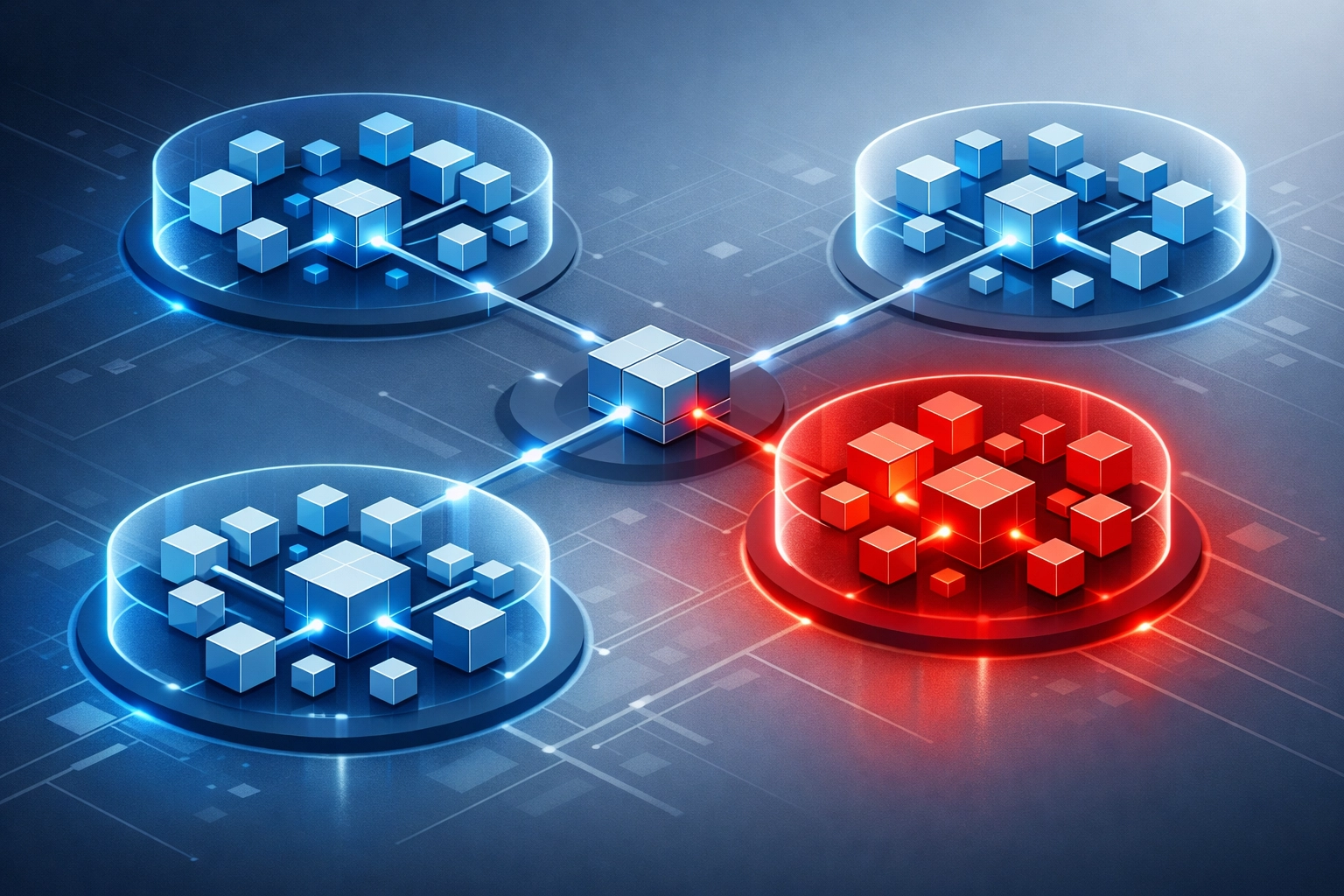
Do not assume a SaaS provider is providing a complete business backup.
Service availability is not the same as recoverability.
Review the provider’s:
- Retention period
- Version history
- Recovery process
- Export options
- Deleted-item recovery
- Administrative controls
- Service-level terms
Use automated backups.
Maintain separate copies.
At least one copy should be protected from routine administrative access and ransomware activity.
Options may include:
- Offline storage
- Immutable storage
- Separate backup credentials
- Isolated backup networks
- Secondary cloud repositories
Recovery objectives should be defined.
Document:
- Recovery point objective
- Recovery time objective
- Critical systems
- Recovery order
- Responsible personnel
- Vendor contacts
- Escalation procedures
Test restoration.
A backup that has never been restored is unverified.
The NIST Data Integrity guidance addresses protection against ransomware and other destructive events.
X-Tek provides managed backup monitoring and infrastructure support for business environments that require ongoing recovery readiness.
6. Create an AI Usage Policy
The policy should be short and enforceable.
Include:
- Approved AI tools
- Prohibited data
- Acceptable business uses
- Required human review
- Vendor approval requirements
- Account ownership
- Password and MFA requirements
- Incident reporting
- Copyright review
- Accuracy requirements
- Record retention
Require human review before AI-generated material is:
- Sent to customers
- Published externally
- Used in financial decisions
- Used in employment decisions
- Added to production code
- Used in legal or compliance work
- Used to change business records
AI tools can generate inaccurate or incomplete results.
Human review remains required.
Train employees on:
- Data handling
- Phishing
- Voice cloning
- Deepfakes
- Hallucinations
- Prompt injection
- Copyright
- Confidentiality
- Reporting procedures
7. Use a Phased Deployment
Do not connect every system at once.
Use a controlled sequence.
Phase 1: Inventory
Document:
- Current tools
- Users
- Data
- Integrations
- Network performance
- Security controls
- Backup coverage
Phase 2: Baseline Controls
Implement:
- MFA
- Patching
- Endpoint protection
- Least privilege
- Network segmentation
- Backup monitoring
- Restoration testing
Phase 3: Data Preparation
Clean and classify data.
Assign owners.
Remove unnecessary access.
Document permitted use.
Phase 4: Low-Risk Pilot
Start with one defined use case.
Examples:
- Internal document search
- Meeting transcription
- Draft creation
- Help desk summaries
- Inventory analysis
- Internal knowledge retrieval
Set success criteria.
Measure:
- Accuracy
- Time saved
- Cost
- Data exposure
- User adoption
- Required corrections
Phase 5: Review and Expand
Review the pilot.
Update policies.
Correct data issues.
Adjust permissions.
Confirm backup and recovery.
Expand only after the control review is complete.
X-Tek Managed IT and AI Support
AI readiness requires ongoing management.
Networks are monitored.
Accounts are reviewed.
Systems are patched.
Backups are verified.
Security events are investigated.
AI tools and integrations are evaluated as the environment changes.
X-Tek provides managed IT support, Microsoft and Google cloud services, server and endpoint maintenance, network infrastructure, security monitoring, and backup support.
Our business services can be aligned with an AI readiness assessment and phased deployment plan.
The first step is a current-state review.
Document the infrastructure.
Identify the gaps.
Prioritize the controls.
Deploy AI after the foundation is ready.
Contact Information
Business Solutions Information Request:
https://xtekit.com/business-solutions-information-request/
815-516-8075