
The Problem
Small businesses are targets.
Cyber criminals know this.
They view SMBs as soft targets. Limited security budgets. Valuable data. Fewer IT resources.
The "wait and see" approach doesn't work here.
By the time you notice a breach, the damage is done.
Data stolen. Systems compromised. Operations halted.
Recovery costs pile up fast.
Reactive vs. Proactive
Two approaches exist.
Reactive security:
- Respond after an attack
- Focus on damage control
- Scramble to restore systems
- Pay for expensive incident response
Proactive security:
- Anticipate threats
- Strengthen controls before exploitation
- Monitor continuously
- Address vulnerabilities early
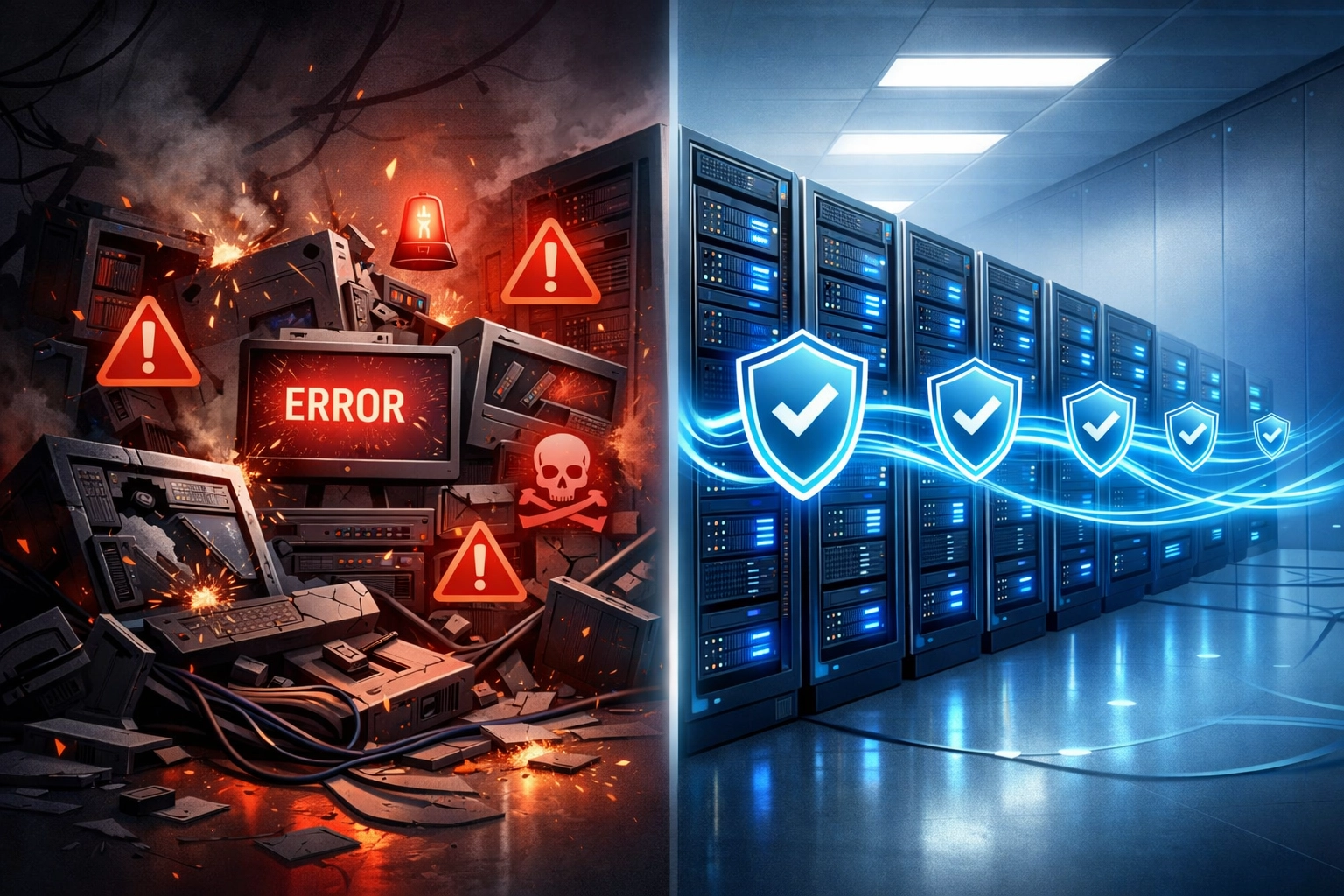
The difference is fundamental.
One waits for disaster. The other prevents it.
Why Waiting Is Costly
A breach isn't just an IT problem.
It's a business problem.
Financial impact:
- Theft and fraud losses
- Breach response costs
- Legal fees
- Regulatory fines
- Lost revenue during downtime
Operational impact:
- Systems offline for days or weeks
- Staff unable to work
- Customer orders delayed
- Data recovery efforts
Reputation impact:
- Customer trust eroded
- Negative press coverage
- Long-term brand damage
Small businesses often lack the cash reserves to absorb these hits.
Some never recover.
The Proactive Advantage
Early detection changes everything.
Proactive network monitoring identifies potential problems before they escalate.
Threats detected in real time. Response happens immediately. Issues resolved before they spread.

Key benefits for SMBs:
Reduced downtime
Problems caught early. Systems stay operational. Customers stay happy. Revenue keeps flowing.
Cost savings
Prevention costs less than recovery. Focus resources on critical vulnerabilities. Avoid expensive emergency responses.
Data protection
Continuous monitoring guards sensitive information. Customer data secured. Financial records protected. Proprietary business data safe from unauthorized access.
Customer confidence
Strong security practices build trust. Clients know their information is protected. Business relationships strengthen.
What Proactive Security Looks Like
Not just antivirus software.
A comprehensive approach.
Continuous monitoring
Network traffic analyzed 24/7. Anomalies flagged immediately. Suspicious activity investigated.
Vulnerability assessments
Regular scans identify weaknesses. Patches applied promptly. Security gaps closed before exploitation.
Firewall management
Rules updated continuously. Unauthorized access blocked. Traffic filtered appropriately.
Endpoint protection
Every device monitored. Laptops, desktops, mobile devices. All entry points secured.

Security updates
Software kept current. Known vulnerabilities patched. Systems hardened against new threats.
Access controls
User permissions managed. Unnecessary access revoked. Principle of least privilege applied.
Backup verification
Data backups tested regularly. Recovery procedures confirmed. Business continuity ensured.
Compliance Simplified
Regulations exist for a reason.
HIPAA. PCI-DSS. State privacy laws.
Non-compliance carries penalties.
Proactive security naturally aligns with regulatory requirements.
Continuous monitoring provides documentation. Security testing creates evidence. Auditors see what they need to see.
Multiple compliance frameworks satisfied simultaneously.
No scrambling when audit notices arrive.
The SMB Challenge
Building enterprise-grade security internally isn't realistic for most small businesses.
The costs are prohibitive:
- Security specialists command high salaries
- Tools and software require significant investment
- Training takes time
- 24/7 coverage demands multiple staff members
This is where managed security services make sense.
Enterprise-grade protection at SMB-friendly prices.
Professional monitoring without the overhead.
Security that scales with your business.
No massive new investments required as you grow.
Common Misconceptions
"We're too small to be a target."
False. Small businesses are targeted specifically because they're perceived as easy.
"Our antivirus is enough."
It's one layer. Modern threats require multiple layers of defense.
"We don't have anything worth stealing."
Customer data. Employee information. Financial records. Banking credentials. All valuable to criminals.
"IT security is too expensive."
A breach is more expensive. Prevention delivers ROI.
"We'll deal with it if something happens."
By then, options are limited and costs are high.

Warning Signs
Your network may already be compromised.
Watch for:
- Unusual network traffic patterns
- Slow system performance
- Unexpected software installations
- Failed login attempts
- Unfamiliar user accounts
- Files encrypted or missing
- Customers reporting spam from your domain
These require immediate investigation.
Getting Started
Assessment first.
Understand current security posture. Identify gaps. Prioritize risks.
Then implement controls systematically.
Not everything at once. Start with highest-risk areas.
Build from there.
Basic steps:
- Inventory all devices and software
- Update everything to current versions
- Enable multi-factor authentication
- Review user access permissions
- Verify backup procedures
- Establish monitoring
Professional assistance accelerates this process.
The Bottom Line
Network security isn't optional.
Threats are real. Attacks are constant. Small businesses are targets.
Waiting for something to break is not a strategy.
Proactive monitoring and security measures protect your business, your customers, and your future.
The question isn't whether you can afford proactive security.
It's whether you can afford not to have it.
Next Steps
We help small businesses implement effective network security.
Monitoring. Protection. Response.
No complicated contracts. No enterprise-level pricing.
Just solid security that fits your business.
Have Questions?
Reach out: https://xtekit.com/business-solutions-information-request/
Call: 815-516-8075
Don't wait for a breach to take action.