Overview
Managed IT services involve the outsourcing of technology management and support functions to a third-party provider.
Small to medium-sized businesses (SMBs) utilize these services to stabilize infrastructure and control costs.
Selecting the correct provider requires analysis of service models, technical capabilities, and security protocols.
Selection criteria focus on long-term operational efficiency.
Service Models
Technology support is delivered via two primary frameworks.
Break-fix.
Managed Services.
Break-fix operations are reactive.
Support is requested only when hardware or software failures occur.
Billing is based on hourly rates and material costs.
No ongoing monitoring is performed.
Downtime risk is high due to lack of preventative maintenance.
Managed services are proactive.
Infrastructure is monitored 24/7.
Maintenance tasks are scheduled and automated.
Pricing is typically a fixed monthly fee.
We provide continuous oversight to prevent system failures.
Comparison
| Feature | Break-Fix | Managed IT (X-Tek) |
|---|---|---|
| Response | Reactive | Proactive |
| Monitoring | None | 24/7/365 |
| Costs | Variable/Unpredictable | Fixed/Predictable |
| Security | Basic | Multi-layered |
| Strategy | None | Roadmap Planning |
| Updates | Manual | Automated |
Cost Analysis
Financial planning for IT requires assessing direct and indirect expenditures.
Break-fix models result in unpredictable capital outflows.
Major system failures lead to spike billing.
Managed IT services utilize an OpEx (Operational Expenditure) model.
Budgeting is streamlined through flat-rate monthly agreements.
Indirect costs of downtime are minimized through redundant systems and rapid remediation.
Operational Stability
System uptime is critical for SMB revenue generation.
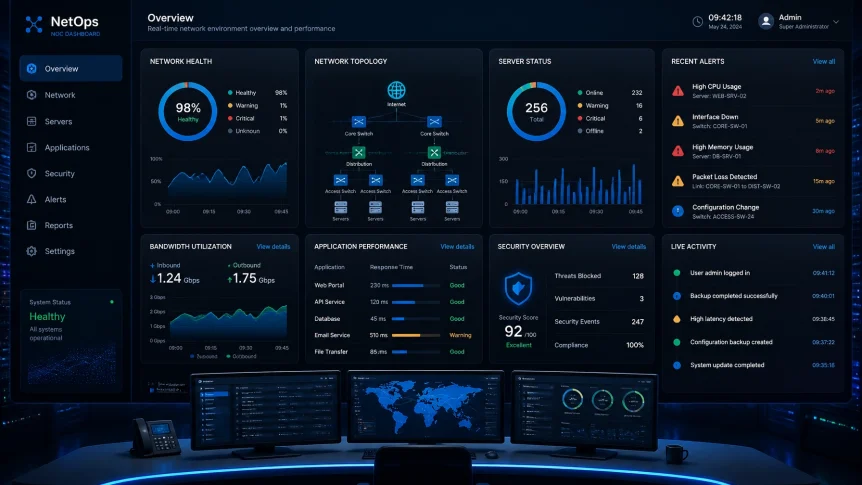
Managed IT utilizes remote monitoring and management (RMM) tools.
Network health is tracked in real-time.
Potential bottlenecks are identified before performance degrades.
Server and PC/MAC maintenance are conducted without user interruption.
Reliable 'IT Done Right' approaches ensure consistent workflow.
Security Management

Cyber threats target SMB vulnerabilities.
Security protocols must be continuous.
Managed services include:
Patch management.
Endpoint protection.
Firewall administration.
Email filtering.
Vulnerability scanning.
Patch management ensures software remains current.
Security patches are deployed across all devices simultaneously.
Vulnerabilities are remediated to prevent unauthorized access.
Backup monitoring is performed daily.
Data integrity is verified through routine recovery testing.
Infrastructure & Cloud
Modern business environments require flexible architecture.
Cloud services from Google and Microsoft are integrated into managed plans.
Migration to cloud environments is managed to prevent data loss.
Network infrastructure design is optimized for scalability.
On-premise servers are maintained alongside cloud-based assets.
Hybrid environments are supported for specialized line-of-business applications.
VOIP & Telephony

Communication systems are transitioned from traditional copper lines to digital platforms.
VOIP systems are deployed on-premise or in the cloud.
Voice traffic is prioritized via Quality of Service (QoS) configurations.
Telephony management is included in comprehensive IT plans.
Feature sets include auto-attendants, mobile integration, and unified messaging.
Communication infrastructure is monitored for jitter and latency issues.
Evaluation Checklist
Providers should be assessed on the following metrics:
Response time SLAs (Service Level Agreements).
Experience with industry-specific software.
Availability of on-site and remote support options.
Documentation standards.
Disaster recovery capabilities.
Hardware procurement processes.
Have Questions?
https://xtekit.com/business-solutions-information-request/
Strategic Planning

IT is aligned with business growth objectives.
Quarterly business reviews (QBRs) are conducted to assess hardware lifecycles.
Budgeting for equipment replacement is planned 12-24 months in advance.
Technology roadmaps are established to support expansion.
Compliance requirements (HIPAA, PCI-DSS) are addressed through technical controls.
We act as a virtual CIO (vCIO) for strategic decision-making.
Managed Support Plans
Support levels are tailored to business size.
Tier 1: Basic monitoring and antivirus protection.
Tier 2: Comprehensive support including help desk and patching.
Tier 3: Enterprise-level infrastructure management and advanced security.
Flexible options allow for scaling as headcount increases.
MAC and PC environments are supported natively.
Network Design

Cabling and hardware installation must meet modern throughput standards.
WiFi 6/6E coverage is mapped for total office saturation.
VLANs (Virtual Local Area Networks) are configured to segregate guest and internal traffic.
Firewalls are provisioned with intrusion detection and prevention systems (IDS/IPS).
Switching fabric is optimized for high-speed data transfer.
Network maintenance is performed to ensure hardware longevity.
Onboarding Process
Transitioning to managed services follows a structured sequence.
Site audit: Physical and logical inventory of all assets.
Network stabilization: Urgent issues are remediated immediately.
Tool deployment: RMM and security agents are installed on all endpoints.
Documentation: Network diagrams and credential vaults are established.
Review: Initial findings and long-term recommendations are presented to stakeholders.
Notifications
Alerts are generated for:
Offline servers.
Failed backups.
Security breaches.
ISP outages.
Hardware thermal warnings.
Storage capacity thresholds.
Response protocols are initiated upon alert receipt.
Remediation is performed remotely when possible.
On-site technicians are dispatched for hardware failures.
X-Tek Support
Business Hours: Monday – Friday, 9:00 AM – 5:00 PM Central
Business Solutions Information Request: https://xtekit.com/business-solutions-information-request/
Phone: 815-516-8075
{“@type”:”Article”,”image”:”https://cdn.marblism.com/cC8wYon7EJB.webp”,”author”:{“name”:”X-Tek”,”@type”:”Organization”},”@context”:”https://schema.org”,”headline”:”How to Choose the Best Managed IT Services for Small Business (Compared)”,”publisher”:{“logo”:{“url”:”https://xtekit.com”,”@type”:”ImageObject”},”name”:”X-Tek”,”@type”:”Organization”},”description”:”A comprehensive comparison of Managed IT services versus Break-Fix models for small to medium-sized businesses, including evaluation criteria and strategic planning.”,”datePublished”:”2026-06-08″,”mainEntityOfPage”:{“@id”:”https://xtekit.com/how-to-choose-best-managed-it-services-for-small-business”,”@type”:”WebPage”}}
{“@type”:”FAQPage”,”@context”:”https://schema.org”,”mainEntity”:[{“name”:”What is the difference between Break-Fix and Managed IT services?”,”@type”:”Question”,”acceptedAnswer”:{“text”:”Break-Fix is a reactive model where you pay for repairs after they happen. Managed IT is a proactive model where services are monitored 24/7 for a fixed monthly fee to prevent issues before they occur.”,”@type”:”Answer”}},{“name”:”Why do small businesses need Managed IT services?”,”@type”:”Question”,”acceptedAnswer”:{“text”:”Small businesses use Managed IT to ensure uptime, stabilize costs, and access enterprise-level security and cloud expertise that would be too expensive to maintain in-house.”,”@type”:”Answer”}},{“name”:”What services are included in a typical Managed IT plan?”,”@type”:”Question”,”acceptedAnswer”:{“text”:”Typical plans include 24/7 monitoring, patch management, help desk support, cloud services integration, VOIP management, and network infrastructure maintenance.”,”@type”:”Answer”}}]}