
VoIP sales pitches focus on savings.
Lower monthly bills. No hardware costs. Easy setup.
The reality includes hidden fees, unexpected charges, and operational costs that vendors conveniently omit.
We've implemented dozens of phone systems. These are the ten things most IT companies won't mention upfront.
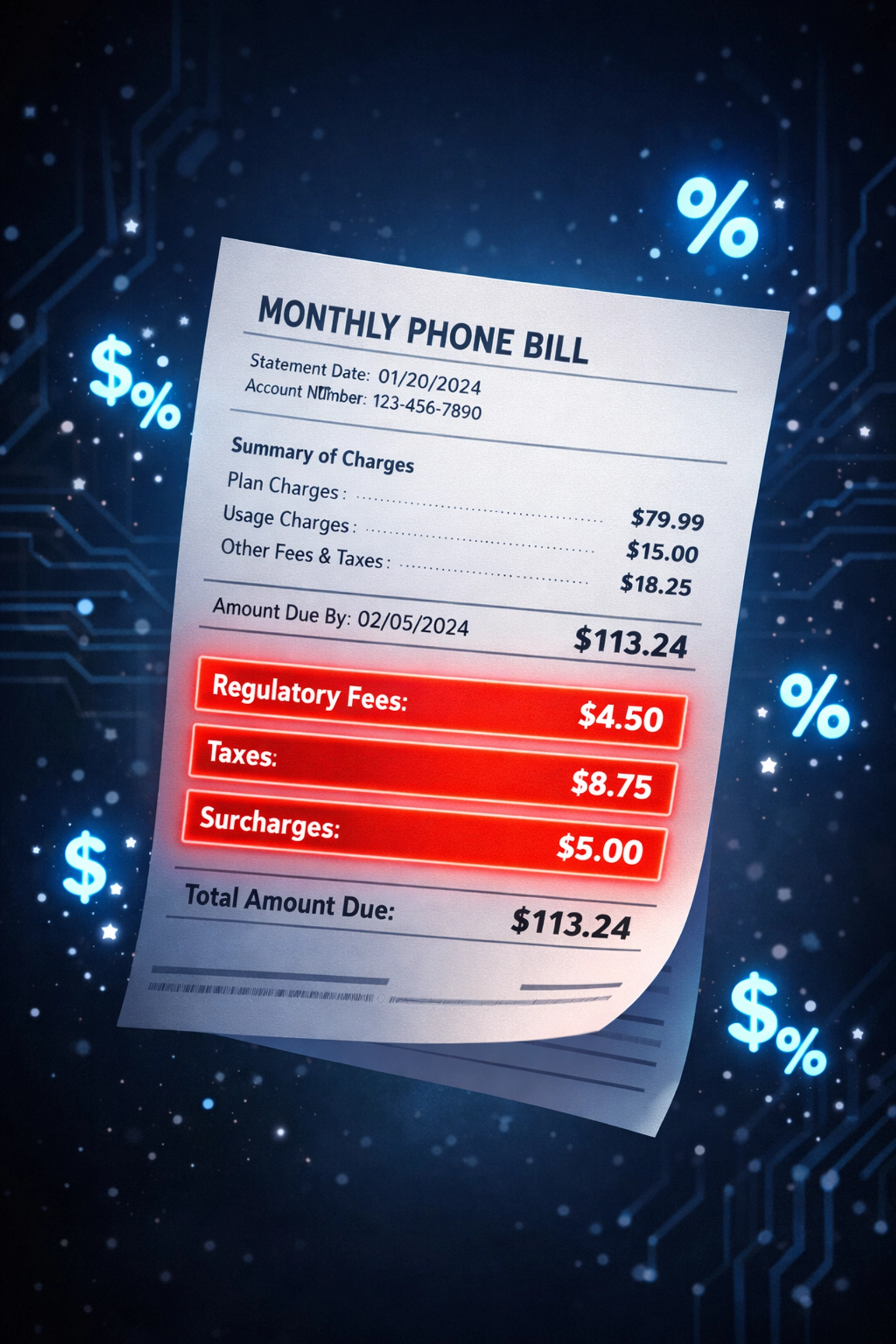
1. Regulatory Fees Add 10-20% to Your Bill
Base price is never your actual price.
E911 fees: $0.30–$2.50 per line monthly.
Universal Service Fund: 7–12% of total bill.
State and local taxes: 3.5–9% of total bill.
These charges are mandatory. They appear on every invoice. Vendors rarely disclose them during sales calls.
A quoted $25/user system actually costs $28–$30/user after regulatory fees.
Calculate total cost including these mandatory charges before signing.
2. Toll-Free Numbers Cost Per Minute
Inbound toll-free calls aren't free for you.
Rate: $0.02–$0.05 per minute for received calls.
High call volume businesses pay significantly more. A company receiving 200 hours of toll-free calls monthly adds $240–$600 to their bill.
This scales directly with business growth. More customers calling means higher monthly charges.
3. Premium Features Require Tier Upgrades
Standard plans lack critical capabilities.
CRM integrations are enterprise-tier only.
Call analytics require premium subscriptions.
Custom auto-attendants cost extra.
Advanced call routing locked behind higher plans.
Features presented as "available" during demos require paying $10–$20 more per user monthly.
Compare feature lists across pricing tiers carefully. Calculate actual cost for features you need.
4. International Calling Costs Extra
Domestic calling may be unlimited. International isn't.
Per-minute charges apply to calls outside the US and Canada.
International toll-free has separate premium rates.
Businesses with overseas clients or remote international staff face substantial additional charges.
Request international rate sheets before committing. Review past calling patterns to estimate costs.

5. Hardware Leasing Exceeds Purchase Price
"Free" phones aren't free.
Lease agreements spread equipment costs across 24–36 months. Total paid exceeds outright purchase price by 40–60%.
A $200 phone leased at $10/month costs $360 over three years.
Leased equipment returns to vendor at contract end. You own nothing.
Calculate total ownership cost. Purchasing equipment upfront often saves money long-term.
6. Onboarding and Support Fees Are Separate
Base pricing excludes implementation costs.
Setup fees: $200–$1,000 per location.
White-glove onboarding: $150–$300/hour.
Training sessions: $500–$2,000 per session.
24/7 premium support: Additional monthly fee.
Standard support may be email-only during business hours. Phone support costs extra.
Request complete onboarding cost breakdown. Factor implementation into total first-year expense.
7. Early Termination Penalties Reach Five Figures
Contract exit isn't cheap.
Typical penalty: $1,000–$10,000 depending on remaining term and user count.
A 50-user system with two years remaining may carry $5,000+ termination fee.
These penalties discourage switching even when service quality deteriorates.
Review contract terms carefully. Negotiate termination clauses before signing. Consider month-to-month options if available.

8. Budget Systems Sacrifice Call Quality
Cheap monthly rates come with performance tradeoffs.
Poor connection quality.
Frequent dropped calls.
Noticeable latency and echo.
Audio cutting in and out.
These issues damage professional credibility. Clients notice poor call quality immediately.
Lost deals and frustrated customers cost far more than monthly savings. One lost sale typically exceeds annual VoIP savings.
Call quality directly impacts revenue. Prioritize reliability over lowest price.
9. Downtime Has Real Costs
Budget providers lack redundancy and disaster recovery.
Single datacenter configurations create single points of failure.
No automatic failover capabilities.
Extended outages during provider issues.
Phone system downtime means:
- No incoming customer calls
- No outgoing sales calls
- Lost business opportunities
- Staff productivity停停 stops
Calculate hourly revenue impact of complete phone system failure. Compare against cost difference between budget and enterprise-grade solutions.
Geo-redundant systems with automatic failover cost more monthly but prevent expensive outages.
10. Network Upgrades May Be Required
Existing internet may not support VoIP demands.
VoIP requires:
- Sufficient bandwidth for concurrent calls
- Quality of Service (QoS) configuration
- Separate VLAN for voice traffic
- Managed switches instead of basic switches
Network infrastructure upgrades add $2,000–$10,000+ depending on office size.
These costs aren't included in per-user VoIP pricing. They're necessary for reliable performance.
Request network assessment before committing. Factor upgrade costs into total implementation budget.

Getting Accurate Pricing
Request complete total cost of ownership breakdown.
Include:
- Base monthly per-user rate
- All regulatory fees and taxes
- Equipment costs (purchase or lease total)
- Setup and implementation fees
- Training costs
- International calling rates
- Premium feature pricing
- Support tier costs
- Required network upgrades
Compare total first-year cost across providers. Not just monthly rate.
Transparent vendors disclose all costs upfront. Companies hiding fees in fine print create billing surprises later.
Making the Right Choice
VoIP offers legitimate benefits when implemented correctly.
Cost savings are real. Flexibility is valuable. Features exceed traditional phone systems.
But accurate cost comparison requires complete information.
Work with IT partners who disclose all costs upfront. Request detailed proposals including regulatory fees, equipment expenses, and implementation costs.
Calculate total ownership cost over contract term. Factor call quality and reliability into decision.
Need help evaluating VoIP options? Contact us for an honest assessment without hidden surprises.