Definition
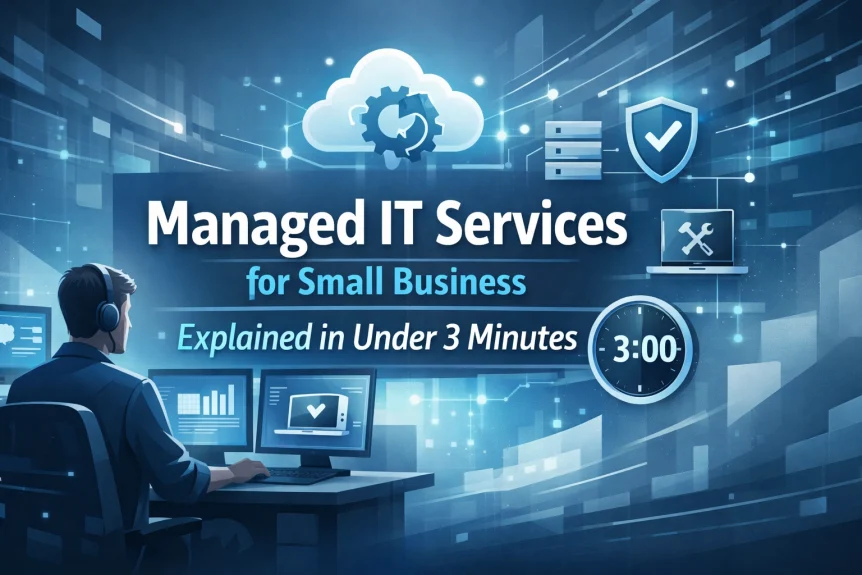
Managed IT services involve outsourcing information technology operations to a third-party provider.
X-Tek acts as the Managed Service Provider (MSP).
IT infrastructure is monitored, maintained, and supported remotely and onsite.
Ongoing management is provided for a fixed monthly fee.
Models
Break-fix model:
Repairs are performed only after systems fail.
Invoices vary based on hours worked.
Downtime occurs before intervention.
No proactive maintenance is performed.
Managed services model:
Systems are monitored continuously.
Issues are identified before failure occurs.
Costs are predictable.
Maintenance is scheduled during off-hours.
Network Security Monitoring
Firewalls are configured and managed.
Traffic patterns are analyzed for anomalies.
Intrusion detection systems are deployed.
Threats are neutralized at the perimeter.
Security patches are applied to firmware.
VPN access is secured for remote workers.

Cybersecurity Layers
Endpoint detection and response (EDR) is installed on workstations.
Antivirus definitions are updated automatically.
Multi-factor authentication (MFA) is enforced across applications.
Email filtering is utilized to block phishing attempts.
Dark web monitoring is conducted for compromised credentials.
Security awareness training is assigned to employees.
Cloud Migration
On-premises servers are transitioned to cloud environments.
Data is migrated to Microsoft 365 or Azure.
Email systems are moved to hosted platforms.
Cloud storage is configured with permission-based access.
Application performance is optimized for remote access.
Synchronization errors are resolved.
Cloud Management
Cloud resources are scaled based on demand.
Monthly consumption is monitored for cost control.
User identities are managed through centralized directories.
Cloud backups are performed daily.
Service level agreements (SLAs) are monitored for uptime compliance.

Network Infrastructure
Routers and switches are monitored for uptime.
Wi-Fi access points are optimized for coverage.
VLANs are created to segregate guest and corporate traffic.
Bandwidth usage is tracked to prevent bottlenecks.
Cabling and hardware are replaced at end-of-life cycles.
Configuration backups are stored for network devices.
VoIP and Communication
Voice over IP (VoIP) systems replace traditional phone lines.
SIP trunking is established for connectivity.
Quality of Service (QoS) is prioritized on the network.
Auto-attendants and call routing are configured.
Voicemail-to-email integration is enabled.
Mobile applications are deployed for remote calling.
Help Desk Support
Tickets are submitted via email or phone.
Issues are triaged based on severity.
Tier 1 support handles password resets and software errors.
Tier 2 support addresses network and server configurations.
Tier 3 support manages complex infrastructure projects.
Remote control software is used for desktop troubleshooting.
Business Continuity
Data is backed up to local and offsite locations.
Backup integrity is verified through automated testing.
Recovery Point Objectives (RPO) are established.
Recovery Time Objectives (RTO) are defined.
Disaster recovery plans are documented and reviewed.
Redundant hardware is staged for rapid deployment.

Patch Management
Operating system updates are tested before deployment.
Third-party application patches are installed.
Critical security vulnerabilities are remediated within 24 hours.
Patch reports are generated for compliance audits.
Update schedules are set to minimize business disruption.
Hardware Procurement
Workstations and laptops are standardized.
Servers are specified based on workload requirements.
Warranties are tracked and renewed.
Asset inventories are maintained.
Old equipment is decommissioned and recycled securely.
Data destruction certificates are obtained for retired drives.
Compliance Support
HIPAA requirements are met for medical data.
PCI DSS standards are applied for credit card processing.
SOC 2 controls are monitored for service organizations.
Access logs are maintained for auditing purposes.
Encryption is applied to data at rest and in transit.
Strategic Planning
Technology roadmaps are developed for 12-36 months.
IT budgets are forecasted annually.
Digital transformation opportunities are identified.
Software licensing is audited for compliance and cost.
Quarterly business reviews (QBR) are conducted.
Monitoring Services
24/7/365 system checks are performed.
Server CPU and RAM utilization are tracked.
Drive space alerts are triggered at 80% capacity.
Internet circuit status is monitored for outages.
Power supply and UPS health are checked.

Operational Efficiency
Automated scripts are used for repetitive tasks.
Standard Operating Procedures (SOP) are followed.
Knowledge base articles are created for recurring issues.
Change management protocols are enforced for system modifications.
Contact X-Tek for Managed IT Services.
Business hours are M-F 9AM-5pm Central Time.
Call 815-516-8075.
Have Questions?
https://xtekit.com/business-solutions-information-request/
Summary of Benefits
Fixed monthly costs.
Access to specialized technical expertise.
Reduced risk of data breaches.
Minimized downtime.
Focus on core business operations.
Scalable technology solutions.
Professional Service Delivery
Consultations are conducted for new projects.
Implementation plans are provided before execution.
Post-project assessments are performed.
Documentation is updated after every change.
Notifications
Alerts are sent to technicians upon system failure.
Status updates are provided for open tickets.
Monthly health reports are delivered to management.
Maintenance Schedule
Weekly: Security scans and patch deployment.
Monthly: Backup verification and performance tuning.
Quarterly: Infrastructure review and security audit.
Annual: Budget planning and hardware refresh.
X-Tek provides comprehensive IT support.
Support is tailored for small and medium-sized businesses.
Technical barriers are removed.
Have Questions?
https://xtekit.com/business-solutions-information-request/
Contact Information
Business Solutions Information Request:
https://xtekit.com/business-solutions-information-request/
Phone: 815-516-8075
Business Hours: Monday – Friday, 9:00 AM – 5:00 PM Central