Category: blog
Overview
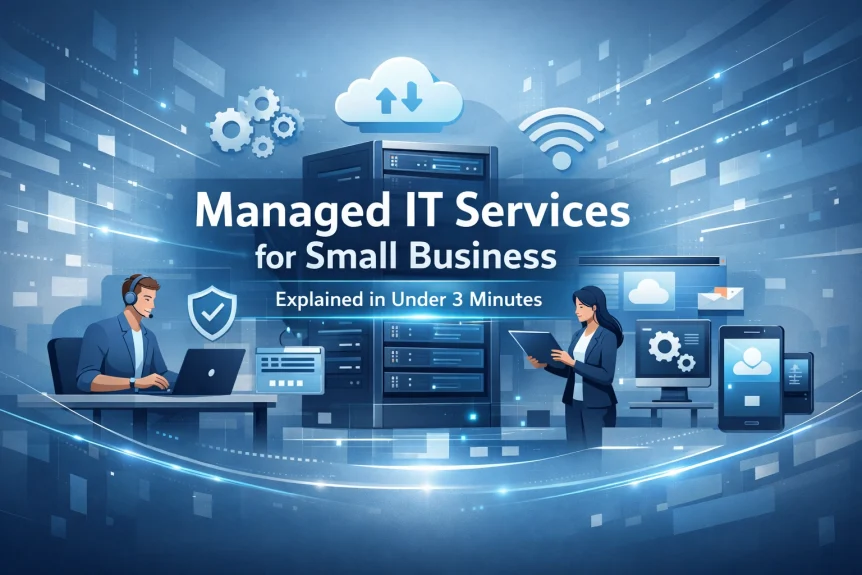
Managed IT services involve outsourcing information technology operations to a third-party provider.
X-Tek operates as a Managed Services Provider (MSP).
Internal IT teams are replaced or supplemented by specialized external experts.
Focus remains on small and medium-sized business (SMB) needs.
Operational efficiency is prioritized.
Technical debt is reduced.
Core Definition
Managed services are characterized by proactive maintenance.
Break-fix models are discarded.
Fixed monthly fees are utilized.
Service Level Agreements (SLAs) define performance expectations.
Systems are monitored 24/7.
Issues are remediated before downtime occurs.
Helpdesk Operations
Technical support is provided for end-users.
Desktop troubleshooting is performed remotely.
Software installations are managed.
Password resets are processed.
Mobile device management (MDM) is implemented.
Peripheral support for printers and scanners is included.
Connectivity issues are resolved.
Hardware procurement is facilitated.

Cybersecurity Protocols
Network security monitoring is mandatory.
Firewalls are configured and managed.
Intrusion detection systems (IDS) are deployed.
Endpoint detection and response (EDR) is utilized.
Antivirus software is updated daily.
Security audits are conducted regularly.
Multi-factor authentication (MFA) is enforced.
Threat hunting is performed to identify vulnerabilities.
Email filtering prevents phishing attacks.
User awareness training is provided.
Ransomware protection is prioritized.
Encryption is applied to sensitive data.
Relevant information regarding common security errors can be found here: 7 mistakes you’re making with small business IT security and how to fix them.
Network Infrastructure
Wireless access points are optimized.
Switch configurations are maintained.
VLANs are established for traffic segregation.
Bandwidth usage is monitored.
Latency is minimized.
Cabling standards are followed.
Router firmware is updated periodically.
VPN tunnels are secured for remote access.
Network maps are documented.
Cloud Management
Cloud migration is facilitated for SMBs.
SaaS platforms like Microsoft 365 are managed.
Cloud storage is scaled according to demand.
Identity management is centralized.
Cloud-to-cloud backups are performed.
Cost optimization for cloud resources is executed.
Azure and AWS environments are monitored.
Data sovereignty requirements are met.
Further reading on migration: is your business ready for the cloud-a simple guide to cloud migration for smbs.

Backup and Disaster Recovery
Data is backed up automatically.
Offsite storage is utilized for redundancy.
Recovery Time Objectives (RTO) are defined.
Recovery Point Objectives (RPO) are established.
Disaster recovery tests are performed annually.
Server images are captured regularly.
File-level restoration is available.
Business continuity planning is integrated.
Cloud-based failover systems are maintained.
Communications and VOIP
Voice over IP (VOIP) systems are implemented.
Legacy phone lines are replaced.
Call routing is configured.
Auto-attendants are programmed.
Softphones are deployed for remote staff.
Quality of Service (QoS) is prioritized on the network.
Unified communications are integrated.
SIP trunking is managed.
Assess communication needs here: do you really need a voip phone system the truth for small businesses.
Strategic IT Consulting
Virtual Chief Information Officer (vCIO) services are provided.
Technology roadmaps are developed.
Budget forecasting is performed.
Compliance alignment is verified (HIPAA, SOC2, GDPR).
Vendor management is handled by us.
IT asset lifecycle management is tracked.
Digital transformation strategies are implemented.
Quarterly business reviews (QBR) are conducted.

Monitoring and Maintenance
Remote Monitoring and Management (RMM) tools are used.
Patch management is automated.
System health checks are performed daily.
Event logs are analyzed.
Resource utilization is tracked.
Disk space alerts are triggered.
Server uptime is monitored.
Application performance is verified.
See details on proactive monitoring: 7 mistakes small businesses make with network security monitoring that hackers love.
Benefits for Small Business
Predictable IT spending.
Reduced capital expenditure (CAPEX).
Increased operational expenditure (OPEX) efficiency.
Access to enterprise-level technology.
Reduced risk of data breaches.
Minimal operational downtime.
Focus remains on core business growth.
Scalability for seasonal demands.
Expertise available without hiring full-time staff.
Explore the value proposition: beyond the help desk why your small business needs managed it services.
Operational Model Differences
Fully Managed IT:
We assume total responsibility for the IT environment.
No internal IT staff required.
Comprehensive coverage.
Co-Managed IT:
We collaborate with existing internal IT personnel.
Specific tasks are offloaded to us.
Back-end monitoring is handled by us.
Internal staff focuses on user-facing projects.

Technical Requirements and Compliance
Security patches are applied within 48 hours of release.
MFA is required for all administrative access.
Password policies are enforced (complexity and rotation).
Audit logs are retained for 365 days.
Encryption at rest is standard.
Encryption in transit is required.
Physical security of hardware is verified.
Unauthorized software is blocked.
Stay updated on login requirements: microsoft just changed login rules your february 9th mfa checklist for small business.
Hardware Lifecycle
Workstations are replaced every 3-5 years.
Servers are decommissioned after 5 years.
Network gear is refreshed to support new standards (Wi-Fi 6/7).
Warranties are tracked and renewed.
E-waste is disposed of securely.
Hard drives are shredded.
Inventory is documented.
Engagement Process
Network assessment is conducted.
Vulnerabilities are identified.
Proposal is generated based on node count and complexity.
Onboarding begins.
Documentation is gathered.
Agents are deployed to all endpoints.
Standardization of stack is initiated.
Regular reporting commences.
Learn more about starting: the small business owners guide to managed it services 5 things you should know before signing.

Implementation Tasks
Backup verification is completed daily.
Firewall logs are reviewed weekly.
Server reboots are scheduled during maintenance windows.
User permissions are audited monthly.
Disaster recovery plans are reviewed quarterly.
Security training modules are assigned to staff.
Hardware firmware is updated during off-hours.
ISP performance is verified.
Contact Information
X-Tek
IT Services
815-516-8075
M-F 9AM-5PM Central Time
Action Items
Review current IT spend.
Identify gaps in security monitoring.
Evaluate cloud readiness.
Assess current backup success rates.
Confirm MFA implementation across all platforms.
Verify network hardware age.
Summary Checklist
- Proactive monitoring enabled
- Helpdesk support available
- Cybersecurity stack deployed
- Cloud resources managed
- Backups verified
- Strategic planning active
- Network stability maintained
- Compliance standards met
Contact Information
Business Solutions Information Request:
https://xtekit.com/business-solutions-information-request/
815-516-8075