
Security requirements have shifted.
Quantum computing threat timelines accelerated. Basic managed IT services no longer sufficient. Small businesses need comprehensive protection spanning current threats and emerging quantum risks.
This checklist covers both.
Identity and Access Controls
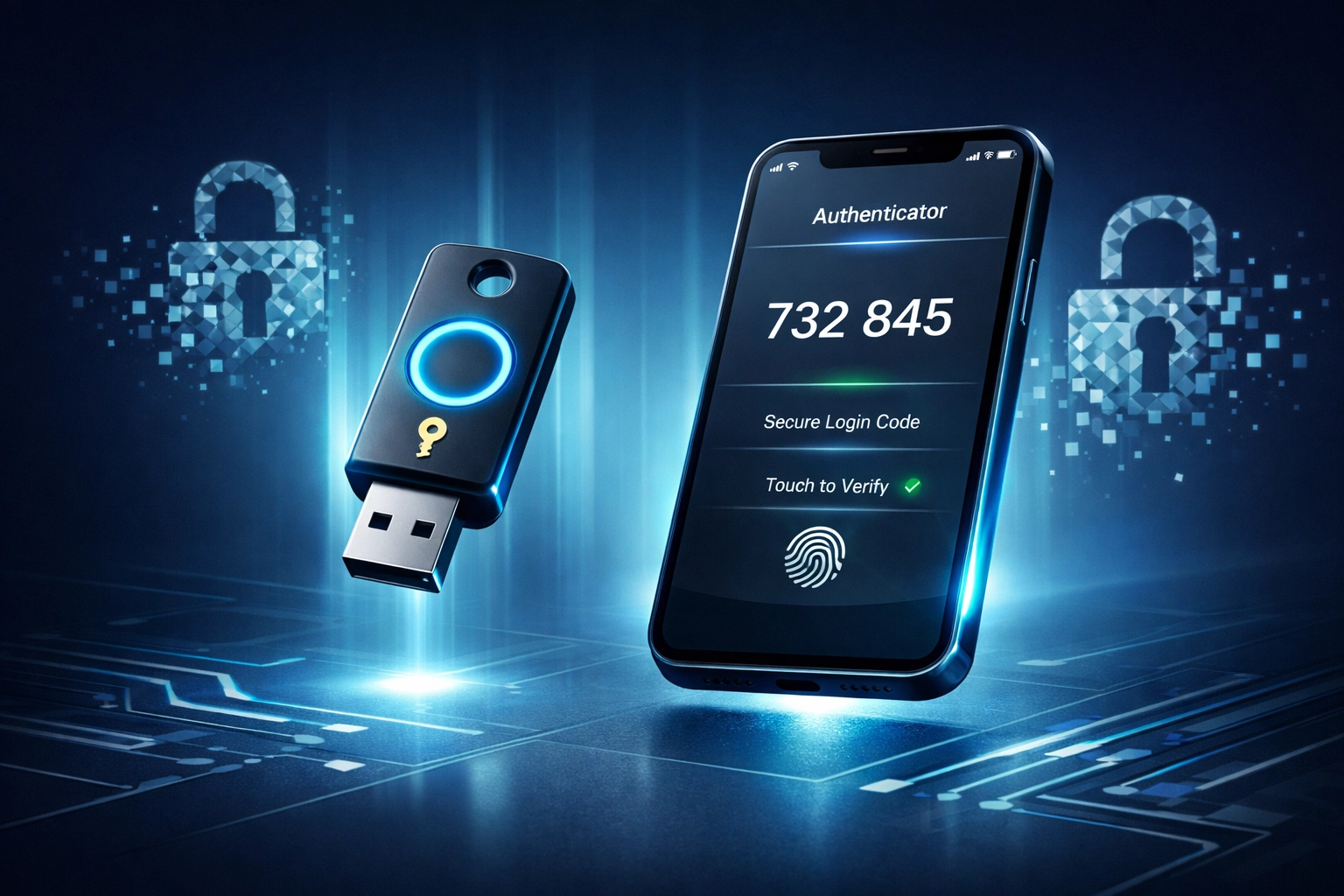
Multi-factor authentication is mandatory across all business accounts.
SMS-based MFA is deprecated. SIM swapping attacks render it ineffective.
Deploy:
- FIDO2 security keys for administrator accounts
- Authenticator apps for standard user accounts
- Phishing-resistant MFA methods only
Principle of least privilege applies to all user accounts.
Users receive minimum permissions required for their role. Review access privileges quarterly. Remove unnecessary permissions immediately.
Encryption Standards
All data requires encryption at rest and in transit.
Minimum requirements:
- Full disk encryption on laptops and mobile devices
- Encrypted cloud storage for all sensitive business data
- TLS 1.3 for network communications
- Database-level encryption for customer records
Current encryption standards (AES-256, RSA-2048) remain effective against classical computers.
Quantum computers will break these standards within 5-10 years.
Endpoint Protection
Every device accessing business systems needs hardening.
Baseline configuration:
- Automatic OS and software updates enabled
- Next-generation antivirus with behavioral analysis
- Screen locks after 5 minutes of inactivity
- Strong password requirements enforced
- Unused software uninstalled
Endpoint Detection and Response (EDR) tools provide visibility into device activity. Deploy EDR where budget allows.
Remove local administrator privileges from standard user accounts.

Network Security
Business-grade firewalls are non-negotiable.
Segment networks by function and sensitivity level. Guest Wi-Fi operates on isolated network. Financial systems exist on separate VLAN from general business operations.
Wi-Fi requirements:
- WPA3 encryption minimum
- Complex passwords (20+ characters)
- MAC address whitelisting where feasible
- Hidden SSID for corporate network
Minimize internet-facing services. Close unnecessary ports. Implement IP whitelisting for remote access.
Cloud Service Configuration
Cloud platforms require active security configuration.
Default settings are insufficient.
Verify:
- Encryption enabled by default on all storage
- Zero-trust access policies implemented
- Multi-factor authentication required for all users
- Automated backup with versioning enabled
- Activity logging and monitoring active
Review cloud service permissions monthly. Third-party application access requires approval and documentation.
Backup Strategy
Ransomware attacks continue to increase.
Backups remain the primary defense against data loss.
3-2-1 backup rule:
- Three copies of critical data
- Two different storage media types
- One copy stored offsite
Test backup restoration quarterly. Verify data integrity. Document recovery procedures.
Backup encryption protects against theft of backup media.

Email Security
Email remains the primary attack vector.
Deploy email security gateway with:
- Anti-phishing filters
- Anti-spam protection
- Malware scanning
- Link rewriting for URL analysis
- Attachment sandboxing
Train users to recognize phishing attempts. Implement reporting mechanisms for suspicious emails.
DMARC, SPF, and DKIM records prevent email spoofing of your domain.
Employee Security Training
Technical controls are insufficient without user awareness.
Quarterly training covers:
- Phishing recognition and reporting
- Password hygiene and management
- Social engineering tactics
- Data handling procedures
- Incident reporting protocols
Simulated phishing exercises identify vulnerable users. Provide additional training where needed.
Security awareness is ongoing. Not annual checkbox compliance.
Post-Quantum Cryptography Preparation
Quantum computers capable of breaking current encryption are approaching viability.
"Harvest now, decrypt later" attacks are already occurring. Encrypted data stolen today will be decrypted when quantum computers become available.
Immediate actions:
- Inventory all encrypted data and systems
- Identify data requiring long-term confidentiality (5+ years)
- Document current cryptographic implementations
- Monitor NIST post-quantum cryptography standards
NIST published final post-quantum cryptography standards in 2024. Migration timelines are compressed.
Priority migration targets:
- VPN connections
- Database encryption
- Backup encryption
- Email encryption
- Certificate authorities
Hybrid cryptographic approaches combine classical and post-quantum algorithms. Implement hybrid solutions where available.

Patch Management
Unpatched systems remain the easiest attack vector.
Implement formal patch management:
- Automated patching for workstations
- Monthly patch cycles for servers
- Emergency patching for critical vulnerabilities within 48 hours
- Testing environment for patch validation
Zero-day vulnerabilities require rapid response. Maintain vendor security contacts and notification systems.
Access Monitoring and Logging
Visibility into system access is essential for breach detection.
Log and monitor:
- Failed login attempts
- Privilege escalation events
- After-hours access to sensitive systems
- Data download or transfer activities
- Configuration changes to security systems
Retain logs for minimum 90 days. Critical systems require 365-day retention.
SIEM systems aggregate and analyze logs from multiple sources. Consider managed SIEM services for small IT teams.
Incident Response Planning
Breaches will occur despite preventive measures.
Response speed determines impact severity.
Documented incident response plan includes:
- Contact information for IT team, legal counsel, cyber insurance carrier
- Step-by-step procedures for containment
- Communication templates for customers and stakeholders
- Data breach notification requirements and timelines
- System recovery procedures
Test incident response plan annually. Update based on lessons learned.

Vendor and Third-Party Risk
Third-party vendors access business systems and data.
Their security becomes your security.
Vendor security assessment:
- Request SOC 2 Type II reports or equivalent
- Verify encryption of data at rest and in transit
- Confirm backup and disaster recovery procedures
- Review data breach notification policies
- Validate compliance with relevant regulations
Document vendor security requirements in contracts. Include right-to-audit clauses.
Compliance Requirements
Industry-specific regulations apply to data security.
Common frameworks:
- HIPAA for healthcare data
- PCI DSS for payment card information
- GDPR for EU resident data
- State data breach notification laws
Non-compliance carries financial and legal penalties.
Map security controls to compliance requirements. Maintain documentation of compliance efforts.
Managed IT Service Integration
Comprehensive security requires dedicated resources.
Small businesses lack internal expertise for full-spectrum security management.
Managed IT services provide:
- 24/7 security monitoring and response
- Patch management across all systems
- Vendor security assessment and management
- Compliance documentation and reporting
- Post-quantum migration planning and implementation
Security is not project work. Security is continuous operations.
Next Steps
This checklist outlines minimum security requirements for 2026.
Implementation priority depends on current security posture and risk tolerance.
Start with:
- Multi-factor authentication deployment
- Backup verification and testing
- Endpoint protection updates
- Cryptographic inventory for post-quantum planning
Security gaps expose business operations to unnecessary risk.
Professional assessment identifies specific vulnerabilities and implementation priorities.
Contact our team for security posture evaluation and managed IT service options.