

Category: blog
Generative AI is now used on both sides of cybersecurity.
Attackers use it to create convincing phishing campaigns, automate reconnaissance, modify malware, and impersonate employees or executives.
Defenders use it to analyze activity, identify anomalies, prioritize alerts, and accelerate response.
For small businesses, the issue is not whether AI will affect cybersecurity.
It already does.
The attacker advantage
Generative AI reduces the time and effort required to launch an attack.
A criminal no longer needs advanced writing skills, extensive research time, or a large team to create a credible campaign.
AI can produce:
- Phishing emails
- Fake invoices
- Password reset messages
- Vendor impersonation requests
- Malicious code
- Social media messages
- Voice and video impersonation scripts
- Translated content for different regions
The result is higher-volume activity with fewer obvious warning signs.
Traditional phishing often contained spelling errors, unusual formatting, or generic language.
AI-generated messages can match a company’s terminology, reference current projects, and imitate the writing style of a manager or supplier.
Business email compromise
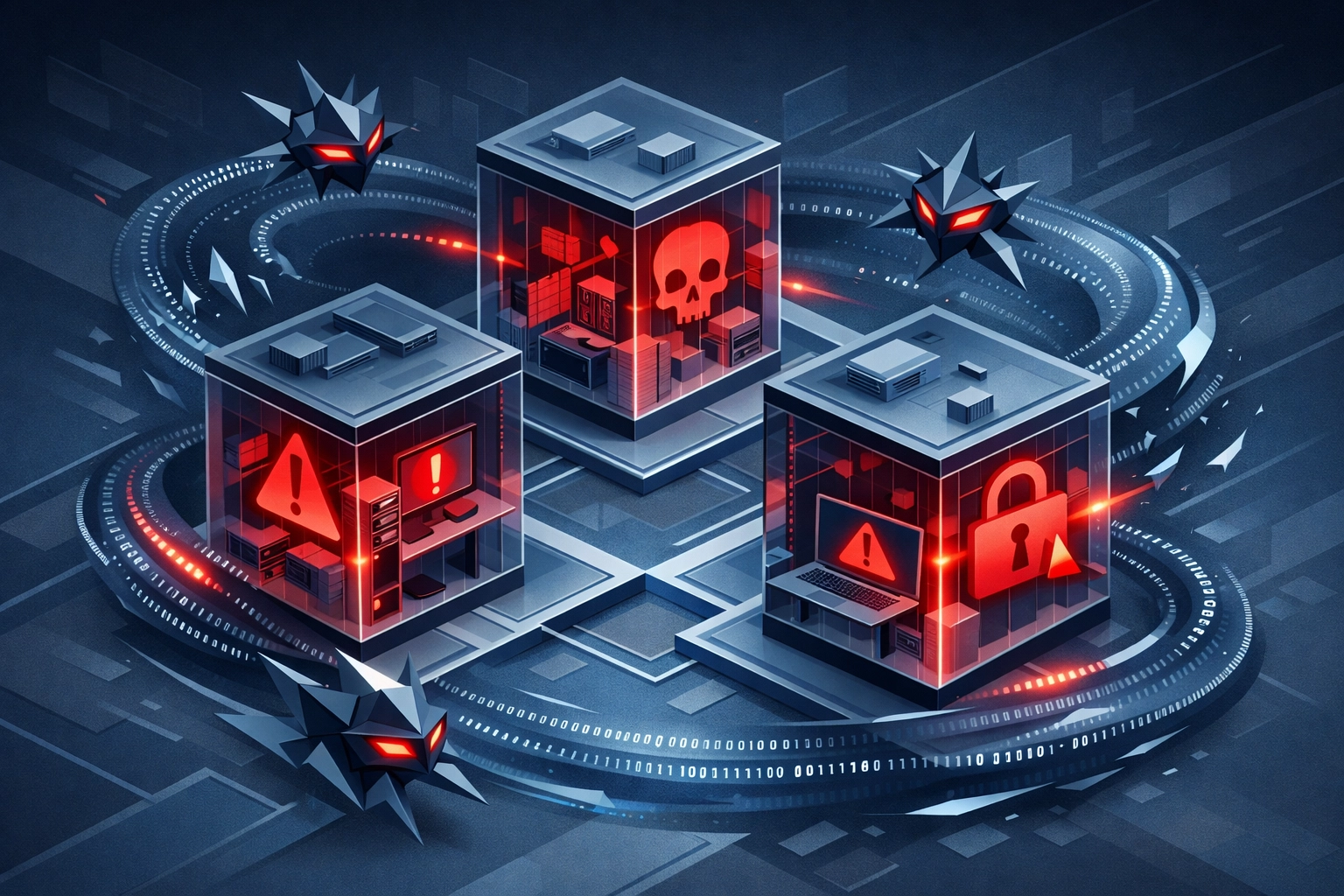
Business email compromise remains a direct financial risk.
An attacker may use information from a company website, social media profile, public filing, or prior data breach.
That information can be used to create a request that appears routine.
Examples:
- Change a vendor’s bank account
- Send a wire transfer
- Purchase gift cards
- Reset a user password
- Share a customer file
- Approve an urgent invoice
- Provide access to a cloud application
Generative AI improves the quality and speed of these requests.
Voice cloning creates another verification problem.
A caller may sound like an executive. A video call may appear to show the correct person. Neither should replace a documented verification process.
High-risk requests require confirmation through a known phone number or a separate approved channel.
Malware and exploitation
AI can also assist with technical attacks.
It can help attackers:
- Identify exposed services
- Search for vulnerable systems
- Modify existing malware
- Generate scripts
- Automate repetitive commands
- Analyze stolen data
- Chain multiple attack steps
This does not mean every AI model can independently execute a complete intrusion.
It does mean the time between vulnerability discovery and exploitation can be reduced.
Internet-facing firewalls, remote access services, VPNs, web applications, and cloud accounts require current patching and monitoring.
The defender advantage
The same capabilities can support security operations.
AI systems can process more activity than a human team can review manually.
They can analyze:
- Authentication events
- Endpoint activity
- Network traffic
- Cloud application logs
- Email patterns
- File access
- Privilege changes
- Geographic login data
- Vulnerability reports
Patterns that appear unrelated to a person may be correlated by an AI-assisted security platform.
A single failed login is usually not enough to indicate an incident.
A failed login followed by an unusual location, a new device, a mailbox rule change, and a large file download is different.
AI-supported monitoring can connect those events and assign higher priority.
Threat detection
AI-powered detection does not depend only on known malware signatures.
Behavioral analysis can identify activity that differs from an established baseline.
Examples:
- A user accessing files outside normal working patterns
- A device initiating unexpected outbound connections
- A service account logging in from an unusual location
- A workstation running unfamiliar processes
- Multiple accounts attempting access to the same resource
- A cloud mailbox forwarding messages to an external address
These signals can indicate account takeover, malware, data theft, or unauthorized administrative activity.
AI does not eliminate the need for security professionals.
It reduces the amount of manual review required and helps suspicious events reach the correct response process faster.
Monitoring and response
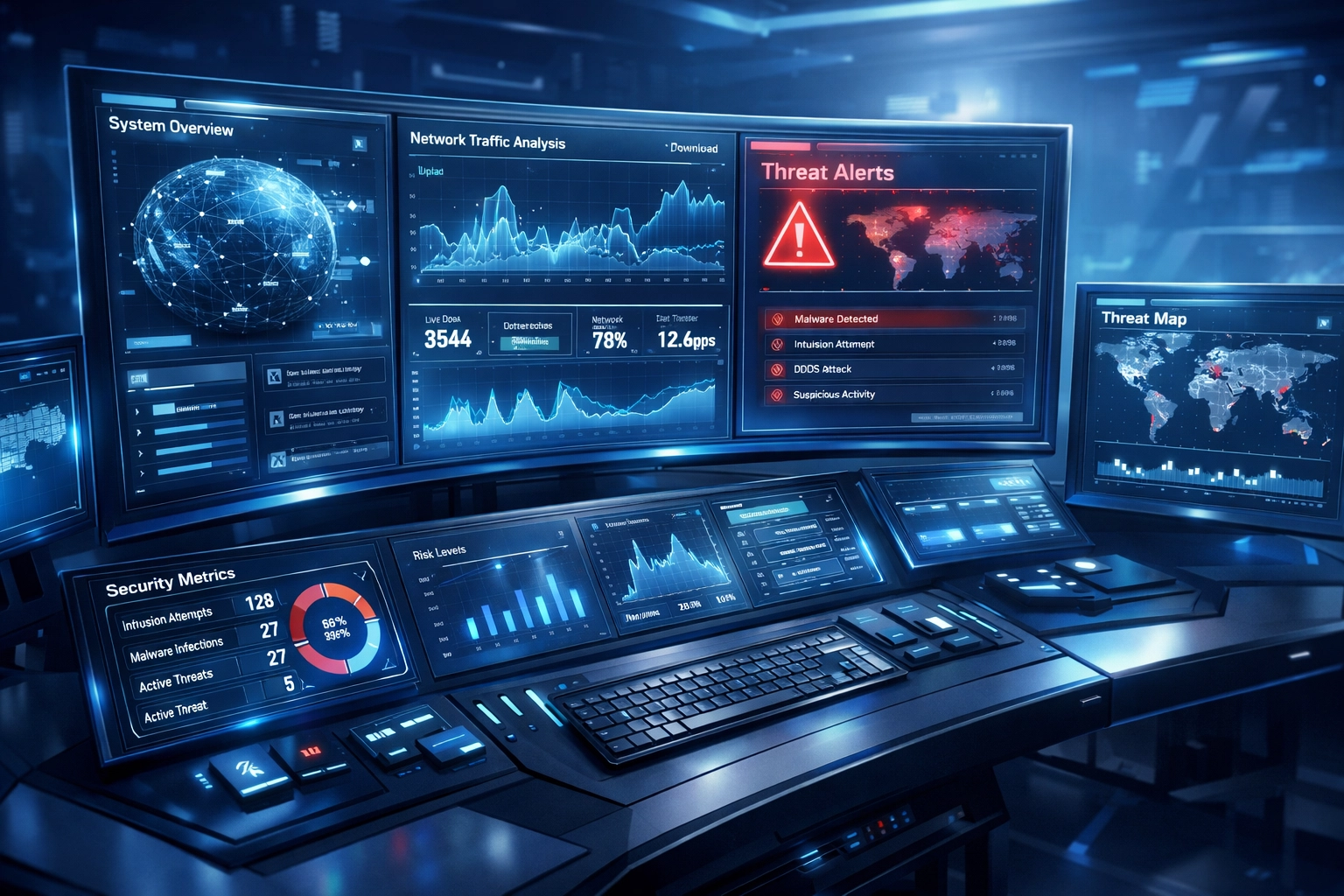
X-Tek uses AI-powered threat detection and monitoring to support small-business security operations.
Systems are monitored across available network, endpoint, identity, cloud, and backup environments.
Suspicious activity is analyzed for risk and context.
Alerts are prioritized.
Threats are investigated and remediated according to the applicable response process.
This supports the managed IT and business support services provided by X-Tek.
The objective is not to replace human judgment.
The objective is to combine automated analysis with technical oversight.
AI identifies patterns.
Security professionals validate findings, determine business impact, and apply the appropriate response.
How X-Tek applies AI-assisted security
Small businesses often lack a dedicated security operations center.
Internal staff may be responsible for accounting, operations, customer service, and technology at the same time.
Continuous monitoring is difficult when security review depends on someone checking a dashboard between other tasks.
X-Tek supports a layered approach.
24/7 monitoring
Security events can occur outside normal business hours.
Networks, endpoints, accounts, and backup systems are monitored continuously where monitoring has been deployed.
Potentially harmful activity can be identified without waiting for the next scheduled review.
Automated detection
AI-powered tools help identify suspicious behavior across multiple systems.
Detection may include:
- Malware activity
- Credential misuse
- Suspicious login behavior
- Unauthorized software
- Abnormal network connections
- Ransomware indicators
- Data movement
- Configuration changes
Automated detection is especially important when attackers are using automation themselves.
Alert triage
Not every alert represents a confirmed breach.
AI-assisted triage helps organize events based on severity, asset importance, user context, and related activity.
This reduces alert overload.
It also helps prevent high-risk events from being lost among low-priority notifications.
Response support
Depending on the tools and service configuration, response actions may include:
- Isolating an endpoint
- Blocking malicious connections
- Disabling a compromised account
- Removing unauthorized persistence
- Escalating an incident
- Restoring affected systems
- Reviewing backup integrity
Response actions are governed by documented procedures.
Human approval may be required for changes that could interrupt business operations.
AI does not replace basic controls
AI tools are one security layer.
They do not compensate for missing fundamentals.
Small businesses still require:
- Multi-factor authentication
- Current operating system and application patches
- Endpoint protection
- Firewall configuration
- Network segmentation
- Least-privilege access
- Email security
- Tested backups
- Password management
- Security awareness training
- Vendor access controls
- Documented incident procedures
The X-Tek guide to proactive network security covers the control areas that support continuous protection.
The AI data risk
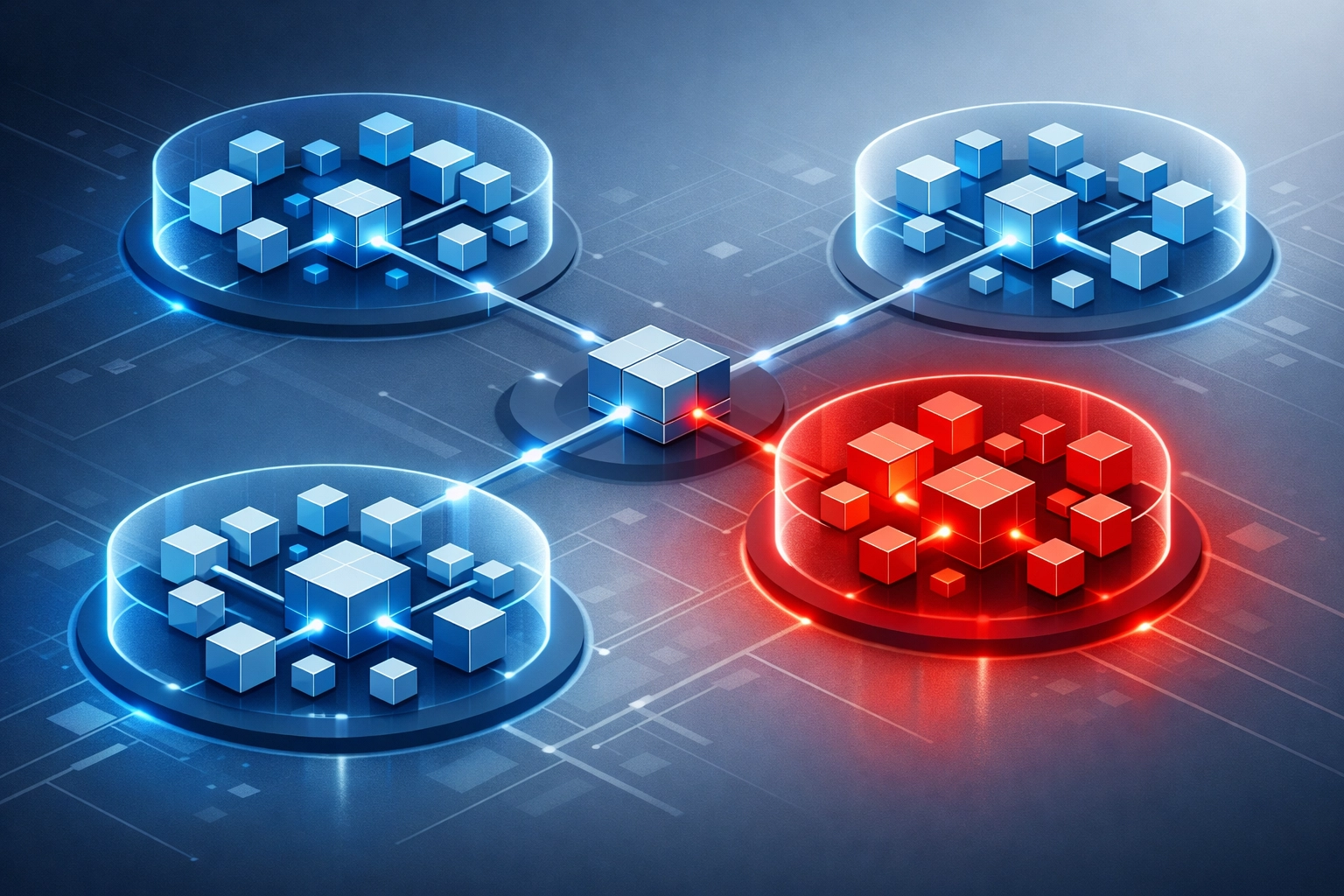
Generative AI introduces another concern.
Employees may paste sensitive information into public AI tools.
Potentially exposed data includes:
- Customer records
- Financial information
- Passwords
- API keys
- Source code
- Contracts
- Internal procedures
- Business plans
- Employee information
A business AI policy should identify:
- Approved AI tools
- Prohibited data
- Account ownership
- Access requirements
- Retention settings
- Review requirements
- Permitted business use
- Incident reporting procedures
AI tools should be treated as business applications.
They require access control, vendor review, and data handling requirements.
Practical controls for AI-enabled threats
Verify high-risk requests
Use secondary verification for payment changes, password resets, sensitive data transfers, and urgent executive requests.
Use known contact information.
Do not rely on the phone number or link supplied in the request.
Monitor identity activity
Cloud accounts are frequent attack targets.
Monitor new devices, impossible travel, unusual downloads, mailbox rule changes, failed authentication, and privilege changes.
Require MFA for email, remote access, administrative accounts, and business-critical applications.
Patch internet-facing systems
Maintain an inventory of external services.
Track patch status.
Prioritize vulnerabilities affecting VPNs, firewalls, remote desktop services, web applications, and identity systems.
Protect and test backups
AI-assisted ransomware can move quickly.
Backups should be separated from production systems where possible.
Access should be restricted.
Recovery testing should be scheduled.
A backup that has not been tested is not a confirmed recovery resource.
Train employees on AI-generated deception
Training should include realistic examples.
Employees should know that correct grammar, familiar branding, and a known name do not establish authenticity.
The verification rule should be simple:
High urgency plus high impact requires a second channel.
Friend or foe
Generative AI is neither automatically safe nor unsafe.
Its effect depends on who controls it, how it is configured, and whether the surrounding security process is functional.
For attackers, AI improves scale, personalization, and speed.
For defenders, AI improves visibility, correlation, and response time.
Small businesses do not need to build proprietary AI systems.
They need security tools that use AI where appropriate, continuous monitoring, current controls, tested recovery procedures, and defined response processes.
X-Tek provides business IT support, cloud services, infrastructure services, and security-focused solutions for small and medium-sized businesses.
The business solutions information request can be used to review current monitoring, endpoint, network, cloud, and backup requirements.
Sources
- World Economic Forum Global Cybersecurity Outlook 2026
- Canadian National Cyber Threat Assessment 2025–2026
- Cyber Threat Alliance Cybersecurity in the Age of Generative AI
- Check Point AI Security Threats in 2026
Contact Information
Business Solutions Information Request:
https://xtekit.com/business-solutions-information-request/
815-516-8075