
Category: blog
Small businesses are targeted because they combine:
- Valuable data
- Connected systems
- Limited security staffing
- Inconsistent monitoring
- Fast payment pressure
- Fewer response resources
Business size does not reduce exposure.
In many cases, it increases risk.
Why attackers target small businesses
Small businesses store and process information that can be monetized.
Examples:
- Customer records
- Payment information
- Employee data
- Banking credentials
- Contracts
- Pricing data
- Tax records
- Intellectual property
- Business credentials
- Cloud files
Attackers do not need to steal everything.
One compromised email account can support invoice fraud.
One exposed server can enable ransomware.
One stolen administrator credential can provide access to cloud applications, endpoints, backups, and network equipment.
Small businesses are also connected to vendors, customers, accounting firms, payment providers, and larger business partners.
A compromised business can become a route into another organization.
The attack does not always begin with a direct target.
Automated tools scan internet-facing systems, remote access services, cloud applications, and email accounts.
Weak controls are identified.
Attacks are launched.
How AI changes the threat
AI reduces the time and labor required to conduct an attack.
Attackers can use AI to:
- Generate phishing messages
- Analyze public company information
- Personalize business email compromise attempts
- Create fake invoices
- Modify messages after a victim responds
- Translate content into different languages
- Automate vulnerability discovery
- Generate malicious code
- Clone voices
- Impersonate executives and vendors
Older phishing campaigns often contained obvious signs.
Spelling errors.
Generic wording.
Unusual formatting.
AI-generated messages can use the same terminology as the business.
They can reference current projects.
They can imitate a known vendor.
They can appear to come from a company leader.
A request to change payment instructions may look routine.
A voice call may sound familiar.
A video meeting may appear legitimate.
Verification remains necessary even when the message appears accurate.
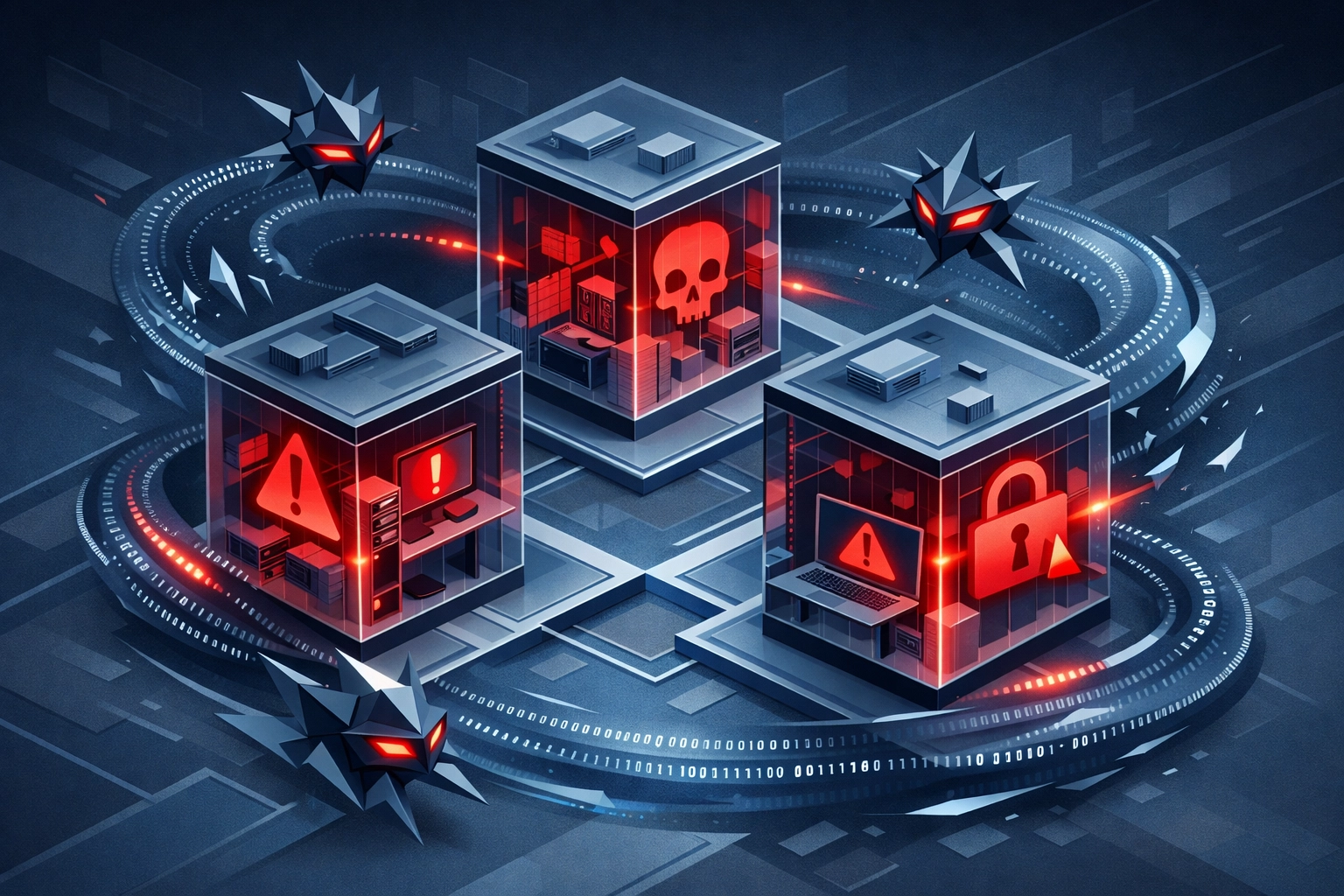
AI also supports scale.
An attacker can test thousands of accounts, domains, and network services without manually reviewing each one.
The weakest environment can be selected automatically.
Small businesses are not required to be personally known by the attacker.
They only need to be exposed.
Common conditions that increase risk
Limited security coverage
Many small businesses do not have internal security staff.
IT responsibilities may be assigned to one employee, an office manager, or an outside provider without continuous security coverage.
Routine tasks may be completed.
But alerts may not be reviewed after hours.
Suspicious login activity may remain open overnight.
A compromised endpoint may continue communicating with an external command server.
A firewall event may not be investigated until the next business day.
AI-powered attacks do not follow business hours.
Outdated systems
Unpatched operating systems, applications, firewalls, remote access tools, and network devices create known attack paths.
Automated scanners identify these weaknesses quickly.
Delayed patching increases exposure.
Unsupported systems increase it further.
Flat networks
A flat network allows movement between systems after one device is compromised.
An infected workstation may reach:
- File servers
- Accounting systems
- Domain controllers
- Backup systems
- Network equipment
- Cloud applications
Network segmentation limits this movement.
Access should be restricted by user, device, application, and business requirement.
Excessive access
Shared accounts and broad permissions create additional exposure.
Employees may retain access after changing roles.
Former users may remain active.
Service accounts may have administrator privileges.
Cloud applications may be connected without review.
Least-privilege access reduces the effect of one stolen credential.
Unmanaged AI tools
Employees may use public AI tools for writing, transcription, customer support, coding, or document analysis.
Sensitive information may be entered into personal accounts.
Business data may be transferred outside approved systems.
AI tools should be inventoried and reviewed.
X-Tek’s guide to AI security mistakes and corrective controls covers tool inventory, account management, data handling, embedded AI features, and incident response.
Network security monitoring
Prevention controls are required.
Visibility is also required.
Network security monitoring identifies activity that bypasses prevention controls.
Networks, endpoints, servers, firewalls, cloud services, and user accounts should be monitored for changes in normal behavior.
Examples of useful indicators:
- Repeated failed logins
- Login activity from unusual locations
- New administrator accounts
- Unexpected remote access
- Large outbound transfers
- Unusual DNS requests
- New external connections
- Disabled security tools
- Unauthorized configuration changes
- Activity outside normal operating hours
- Communication with known malicious infrastructure
One alert may not confirm a breach.
Several related events may show an active attack.
Centralized logging improves investigation.
Endpoint detection adds device-level visibility.
Firewall monitoring shows traffic patterns.
Identity monitoring shows account activity.
Cloud audit logs show access to files, applications, and administrative settings.
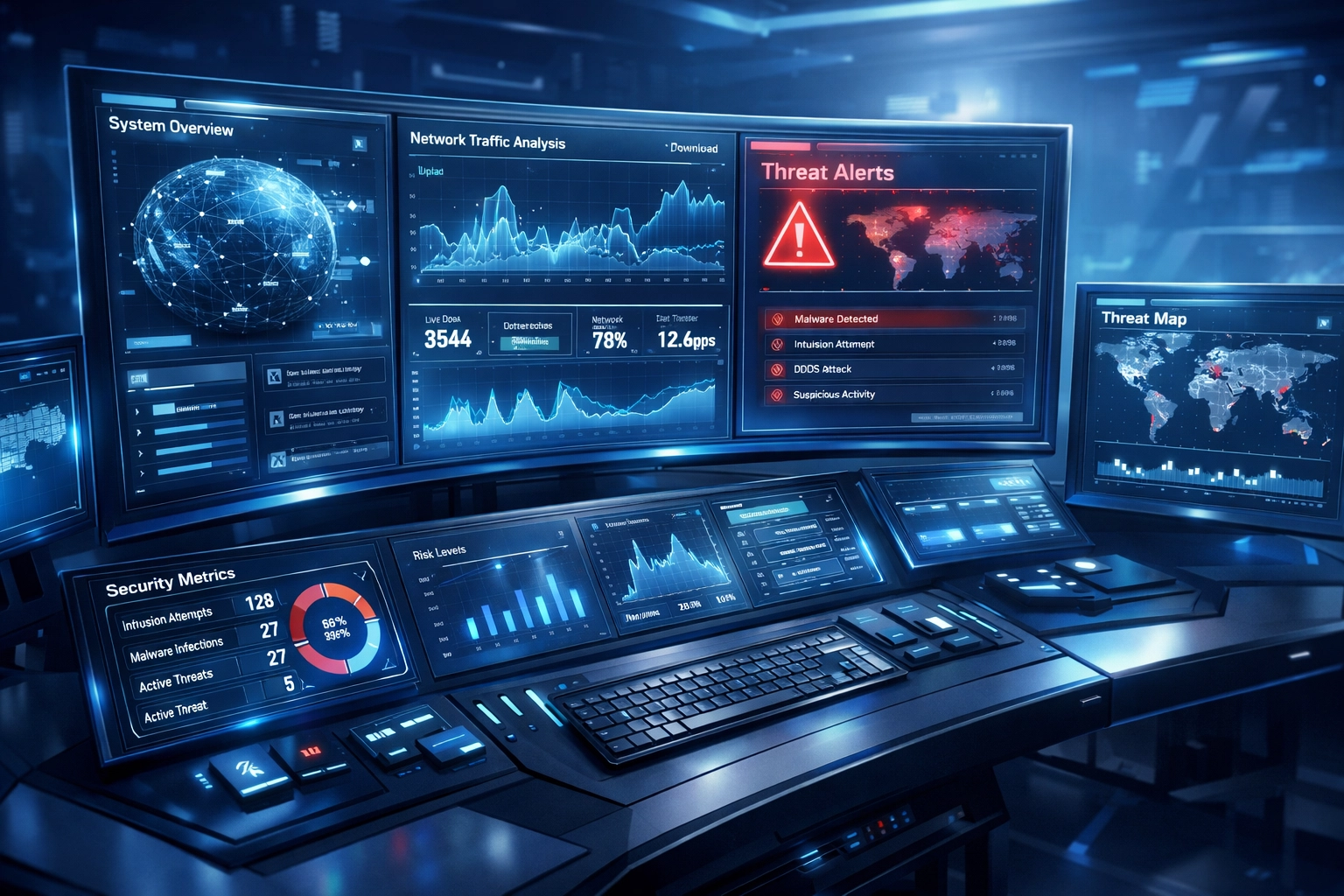
Monitoring should be connected to response procedures.
Alerts should be assigned.
Events should be investigated.
Threats should be contained.
Credentials should be reset when required.
Affected systems should be isolated.
Evidence should be preserved.
A notification without response is not a security program.
Controls that should be in place
Multi-factor authentication
MFA should be enabled for:
- Cloud applications
- Banking
- Remote access
- Administrative accounts
- Backup systems
- Domain management
- Network equipment
MFA does not eliminate account compromise.
It reduces the value of stolen passwords.
Phishing-resistant authentication should be considered for administrator and high-risk accounts.
Patch management
Updates should be tracked.
Critical patches should be prioritized.
Unsupported software should be replaced or isolated.
Firmware should be reviewed for firewalls, switches, wireless equipment, and remote access systems.
Patch status should be visible across the environment.
Endpoint protection
Every endpoint is an entry point.
Protection should cover:
- Workstations
- Laptops
- Servers
- Remote devices
- Mobile devices where applicable
Endpoint controls should include malware prevention, behavioral detection, isolation capability, and centralized reporting.
Email and identity security
Email accounts are common starting points for fraud and data theft.
Controls should include:
- MFA
- Spam and phishing filtering
- Domain-based email authentication
- Login monitoring
- Conditional access
- Secure recovery methods
- Automatic forwarding review
- Administrator alerting
Payment and credential requests should be verified through a separate communication channel.
Network segmentation
Critical systems should not be reachable from every user device.
Separate networks may be required for:
- Staff workstations
- Guest wireless
- Voice systems
- Cameras
- Servers
- Administrative systems
- Point-of-sale devices
- Operational equipment

Segmentation does not replace monitoring.
It limits the scope of an incident.
Backup protection
Backups should be:
- Automated
- Monitored
- Access-controlled
- Tested
- Protected from routine administrator credentials
- Separated from production systems where possible
At least one recovery copy should be protected from ransomware access.
Restoration testing should confirm that systems and data can be recovered.
Backup status should be reviewed continuously.
Why managed security is practical for SMBs
A small business may not be able to staff a security operations function.
The required coverage includes:
- Alert review
- Threat investigation
- Vulnerability management
- Patch oversight
- Endpoint monitoring
- Firewall management
- Identity review
- Backup monitoring
- Incident response
- Security reporting
These functions require tools, process, and personnel.
They also require coverage outside normal business hours.
Managed security provides access to these capabilities without building the complete function internally.
X-Tek managed security includes network security monitoring, infrastructure review, threat detection, backup monitoring, and response coordination.
We assess the environment.
We identify exposed systems and control gaps.
We configure security controls.
Networks and connected devices are monitored.
Alerts are reviewed.
Threats are contained and remediated through managed processes.
Our business IT support and managed support plans can include server maintenance, PC and Mac support, cloud services, network design, network maintenance, and security operations.
The service should match the business environment.
A retail company may require point-of-sale segmentation and payment security.
A professional services firm may require email protection, document controls, and identity monitoring.
A manufacturer may require network separation for operational systems.
A remote workforce may require secure access, endpoint management, and cloud monitoring.
A practical implementation order
Security improvements should be prioritized by exposure and business impact.
-
Inventory users, devices, applications, cloud services, and vendors
-
Enable MFA on critical accounts
-
Remove inactive users and unnecessary administrator access
-
Patch operating systems, applications, firmware, and network equipment
-
Review firewall rules and remote access
-
Separate guest, voice, operational, and business networks
-
Deploy endpoint detection and centralized alerting
-
Configure network security monitoring
-
Protect and test backups
-
Document incident response procedures
-
Review AI tools and data-handling practices
-
Test employee verification procedures for payment and credential requests
The sequence may vary.
The control gaps should be documented.
High-risk issues should be addressed first.
Security posture
Small businesses are targeted because attackers can obtain useful data with limited effort.
AI increases the speed, scale, personalization, and adaptability of those attacks.
Basic controls remain necessary.
They are not sufficient by themselves.
MFA, patching, backups, segmentation, endpoint protection, and employee training should operate as one security program.
Network security monitoring provides visibility.
Managed security provides ongoing review and response.
The X-Tek approach to proactive network security covers continuous monitoring, vulnerability assessment, firewall management, endpoint protection, access controls, and backup verification.
AI risk management should also align with broader guidance from NIST and CISA.
Review these questions:
- Are all business devices inventoried
- Are critical systems monitored after hours
- Is MFA enabled everywhere possible
- Are backups tested
- Are networks segmented
- Are cloud and email logins reviewed
- Are AI tools approved and monitored
- Are payment changes verified separately
- Is there a documented response plan
- Can compromised systems be isolated quickly
Each “no” identifies a control gap.
We can review the current network security posture and identify the next control required.
Contact Information
Business Solutions Information Request:
https://xtekit.com/business-solutions-information-request/
815-516-8075