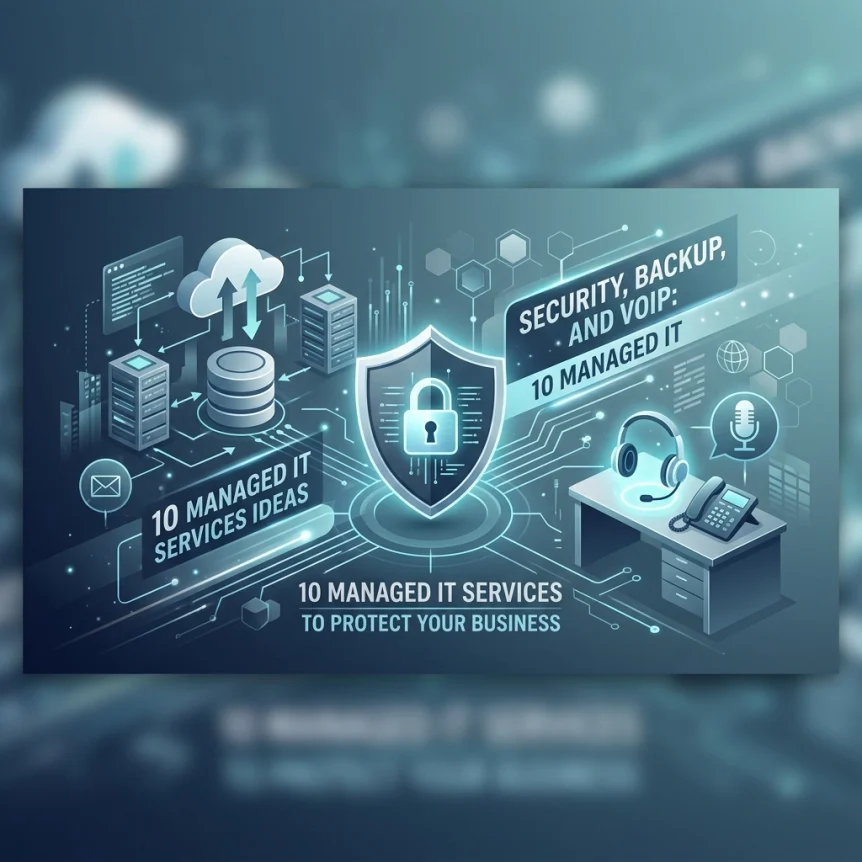
Operational stability is maintained through managed IT services.
Small and medium-sized businesses (SMBs) face evolving digital risks.
Legacy infrastructure is insufficient for current threat environments.
X-Tek provides technical oversight for critical systems.
Protective measures are deployed across security, data retention, and communication channels.
1. 24/7 Managed Security Monitoring
Network security monitoring is performed continuously.
Security Information and Event Management (SIEM) tools analyze logs.
Anomalous patterns are identified in real-time.
Unauthorized access attempts are blocked automatically.
Threat actors target SMBs due to perceived lack of oversight.
Professional monitoring remediates this vulnerability.
Notifications are sent for critical alerts.
Internal links for context:
7 Mistakes Small Businesses Make With Network Security Monitoring
Proactive Network Security Essentials
2. Managed Backup and Disaster Recovery (BDR)
Data loss occurs via hardware failure, human error, or ransomware.
Immutable backups are stored offsite.
Recovery Point Objectives (RPO) are defined by business requirements.
Recovery Time Objectives (RTO) minimize downtime.
Testing is performed regularly to ensure data integrity.
Cloud-to-cloud backup protects Microsoft 365 and Google Workspace data.
Full system restoration is possible within hours.
On-premise servers are mirrored to secure data centers.
We manage the entire backup lifecycle.
3. Voice Over IP (VOIP) Communication
Traditional copper lines are obsolete.
VOIP systems provide encrypted communication.
Remote work is supported via mobile and desktop applications.
Hardware overhead is reduced.
Integration with CRM platforms increases efficiency.
Scalability is immediate for growing teams.
Auto-attendants and call routing are managed via central portals.
Further reading:
The Truth About VOIP For Small Businesses
Common VOIP Mistakes and Solutions
4. Proactive Patch Management
Software vulnerabilities are patched upon release.
Operating systems are kept current.
Third-party applications are updated via automation.
Manual updates are prone to neglect.
Unpatched systems remain the primary entry point for malware.
Compliance requirements often dictate strict patching schedules.
We schedule deployments during maintenance windows.
System reboots are coordinated to minimize disruption.
5. Managed Cloud Migration
On-premise infrastructure is moved to Azure or AWS.
Cloud migration reduces capital expenditure (CAPEX).
Operational expenditure (OPEX) becomes predictable.
Security configurations are hardened during the transition.
Hybrid cloud environments are supported for legacy applications.
Data accessibility is improved for distributed workforces.
Redundancy is built into cloud architecture.
Resource:
Guide to Cloud Migration for SMBs
6. Endpoint Detection and Response (EDR)
Antivirus software is no longer sufficient.
EDR monitors process behaviors on workstations.
Ransomware encryption processes are halted instantly.
Forensic data is collected for post-incident analysis.
Isolating infected devices prevents lateral movement.
Managed EDR provides a higher level of protection than consumer-grade tools.
End-user devices are the frontline of business security.
7. Multi-Factor Authentication (MFA) Implementation
Passwords are easily compromised via phishing.
MFA requires a second form of verification.
Conditional access policies restrict logins based on location.
Biometric or hardware tokens are utilized.
Cyber insurance providers now require MFA for coverage.
Login protocols are updated to meet Microsoft and Google standards.
We enforce identity management across all platforms.
Technical details:
February MFA Checklist for Small Business
8. Network Infrastructure Management
Firewalls are configured with Unified Threat Management (UTM).
Intrusion Prevention Systems (IPS) filter malicious traffic.
Wireless networks are segmented for guests and internal use.
WPA3 encryption is implemented for modern office Wi-Fi.
Hardware lifecycles are tracked for replacement.
Firmware updates for switches and routers are managed.
Bandwidth usage is monitored to identify bottlenecks.
Check:
The 2026 Guide to Secure Office Wi-Fi
9. IT Compliance and Risk Assessment
Cyber insurance applications require technical audits.
Regulatory standards (HIPAA, CMMC, GDPR) must be met.
Vulnerability scans identify weaknesses in the perimeter.
Risk mitigation plans are developed.
Documentation is provided for auditing bodies.
Email deliverability and spam filtering are optimized.
We align technical controls with legal requirements.
External link:
What Your Cyber Insurance Says About Managed IT
10. vCIO and Strategic Roadmapping
Technology must align with business objectives.
Virtual CIO (vCIO) services provide high-level planning.
Budgets are forecasted for the next 12-36 months.
Technical debt is identified and reduced.
Quarterly Business Reviews (QBRs) track progress.
Security postures are evaluated against new threats.
We provide guidance on AI integration and advanced automation.
Implementation
Managed IT services are not a one-time setup.
Ongoing maintenance is required for stability.
In-house staff are often overwhelmed by daily tasks.
Outsourcing management allows internal focus on core business.
Predictable monthly costs replace emergency repair fees.
Scalable solutions adapt to headcount changes.
Security Posture
Protection is layered.
Physical security, network security, and human training intersect.
Phishing simulations educate staff on social engineering.
Email filters prevent malicious links from reaching inboxes.
DNS filtering blocks access to known malicious domains.
Shadow IT is identified and brought under management.
Connectivity
VOIP systems utilize existing internet bandwidth.
Quality of Service (QoS) rules prioritize voice traffic.
Failover internet connections ensure uptime.
SD-WAN technology optimizes traffic across multiple sites.
Communication remains operational during local outages.
Data Retention
Backup systems are monitored for success or failure.
Failed jobs are remediated immediately.
Encryption is applied at rest and in transit.
Data sovereignty requirements are respected.
Long-term archiving is available for legal hold purposes.
Future Proofing
Managed services prepare businesses for AI-powered threats.
Legacy hardware is replaced before failure occurs.
Software licenses are consolidated and managed.
IT environments are documented for business continuity.
We maintain the technical documentation for all client sites.
Operational Details
Managed services are provided under Service Level Agreements (SLAs).
Response times are prioritized based on severity.
Remote support handles 90% of technical issues.
On-site support is dispatched for hardware-related incidents.
Workstations are standardized for ease of management.
Risk Mitigation
Cyber insurance premiums are reduced through managed security.
Evidence of monitoring is provided to insurers.
Business continuity plans are tested annually.
Disaster recovery scenarios are simulated.
We ensure the environment remains compliant with industry standards.
Strategic Growth
IT is a business driver, not just a cost center.
Efficiency increases through automation.
Managed workflows reduce manual data entry.
Collaboration tools improve team communication.
Cloud adoption enables global recruitment.
Notifications:
Managed IT services are active.
Monitoring is 24/7.
Support is available during business hours.
Emergencies are handled per SLA.
Contact Information
Business Solutions Information Request:
https://xtekit.com/business-solutions-information-request/
Phone: 815-516-8075
Business Hours: Monday – Friday, 9:00 AM – 5:00 PM Central